Diving Commissioner Per Hansson Sunn’s house
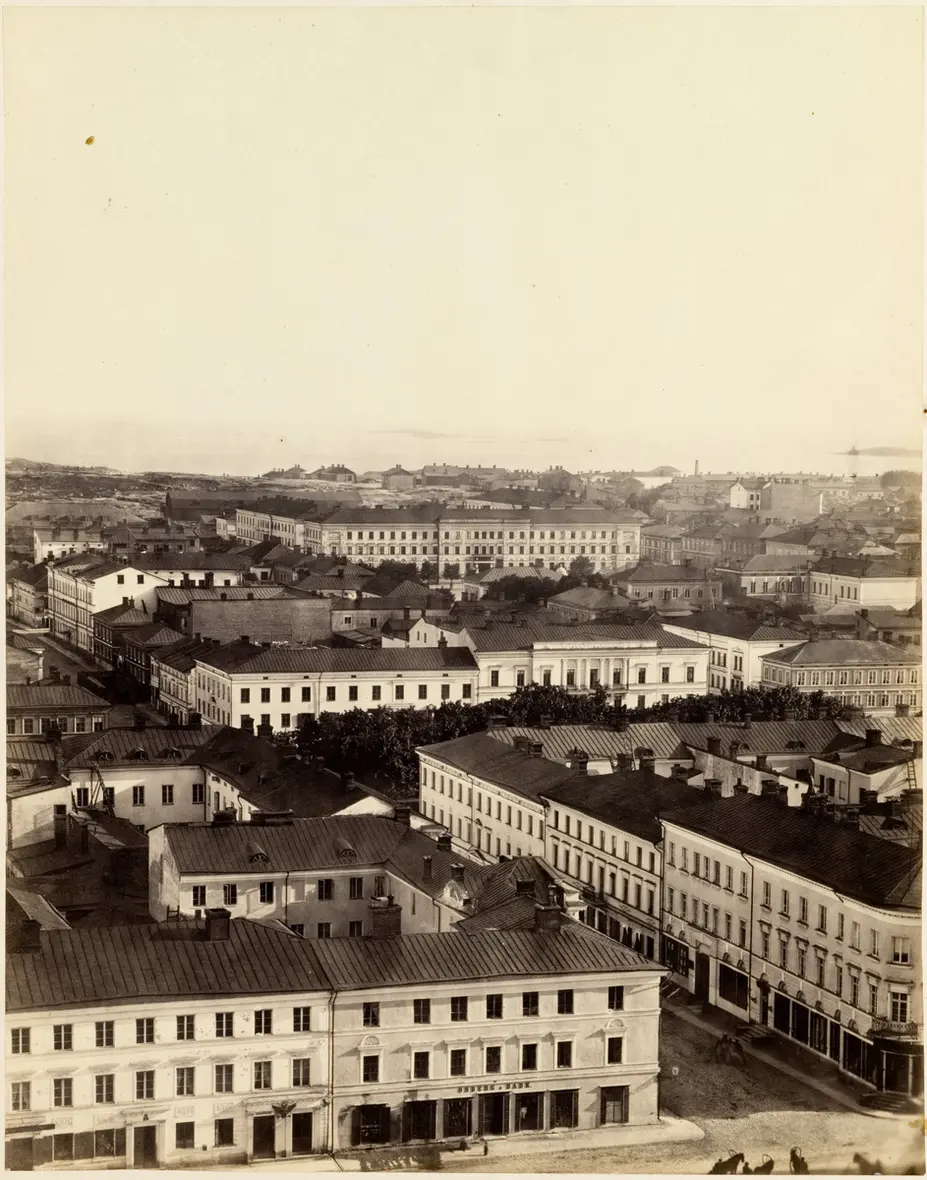
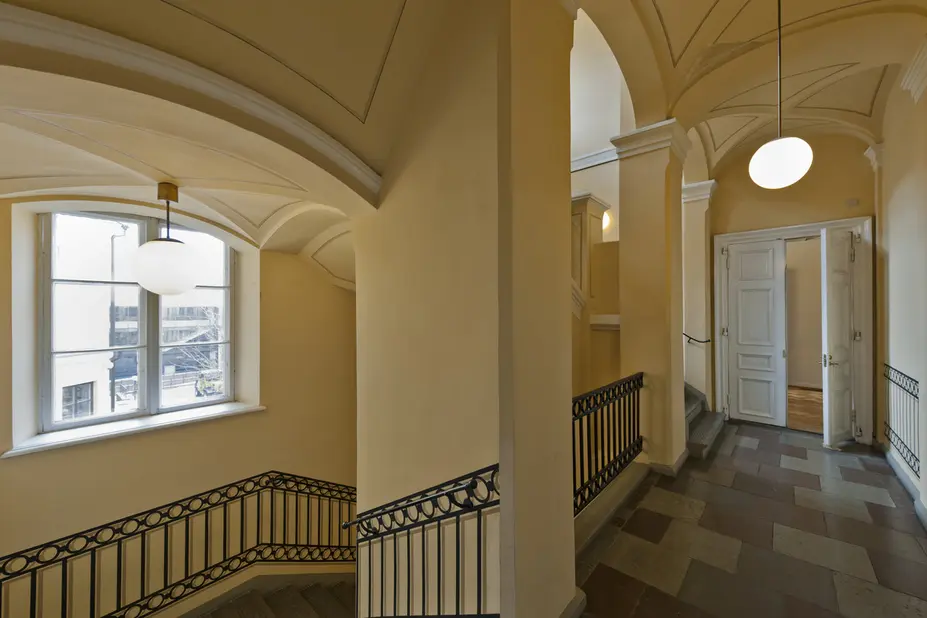
In the southwest corner of Senate Square (Aleksanterinkatu 26) stands the three-storey empire-style Sunn House. The yellow building, now featuring a gable roof, was originally a two-storey house with a mansard roof.
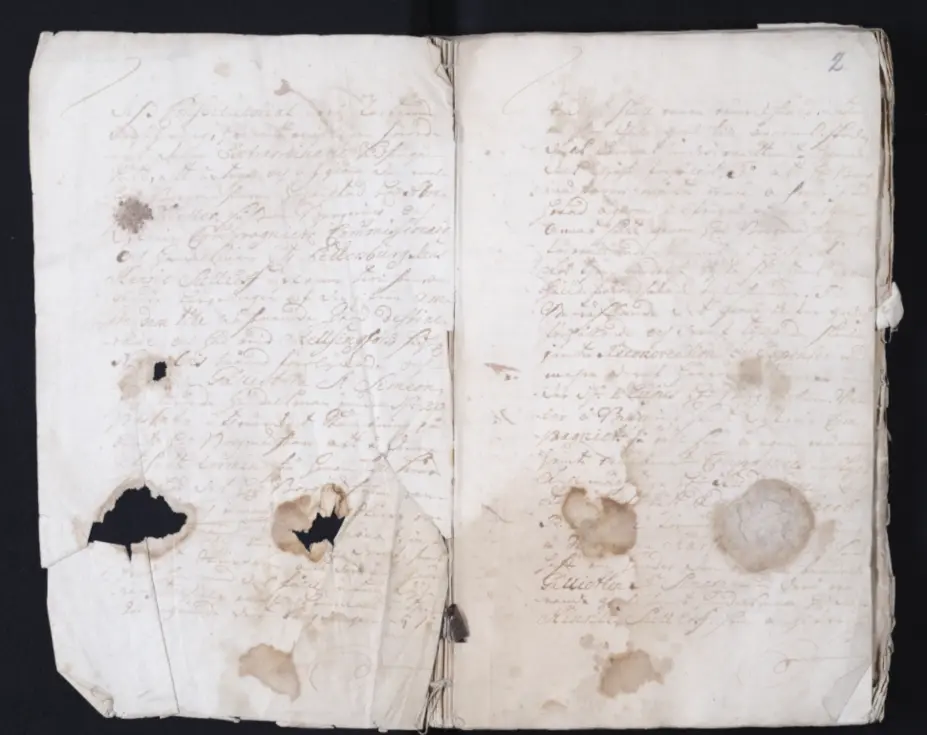
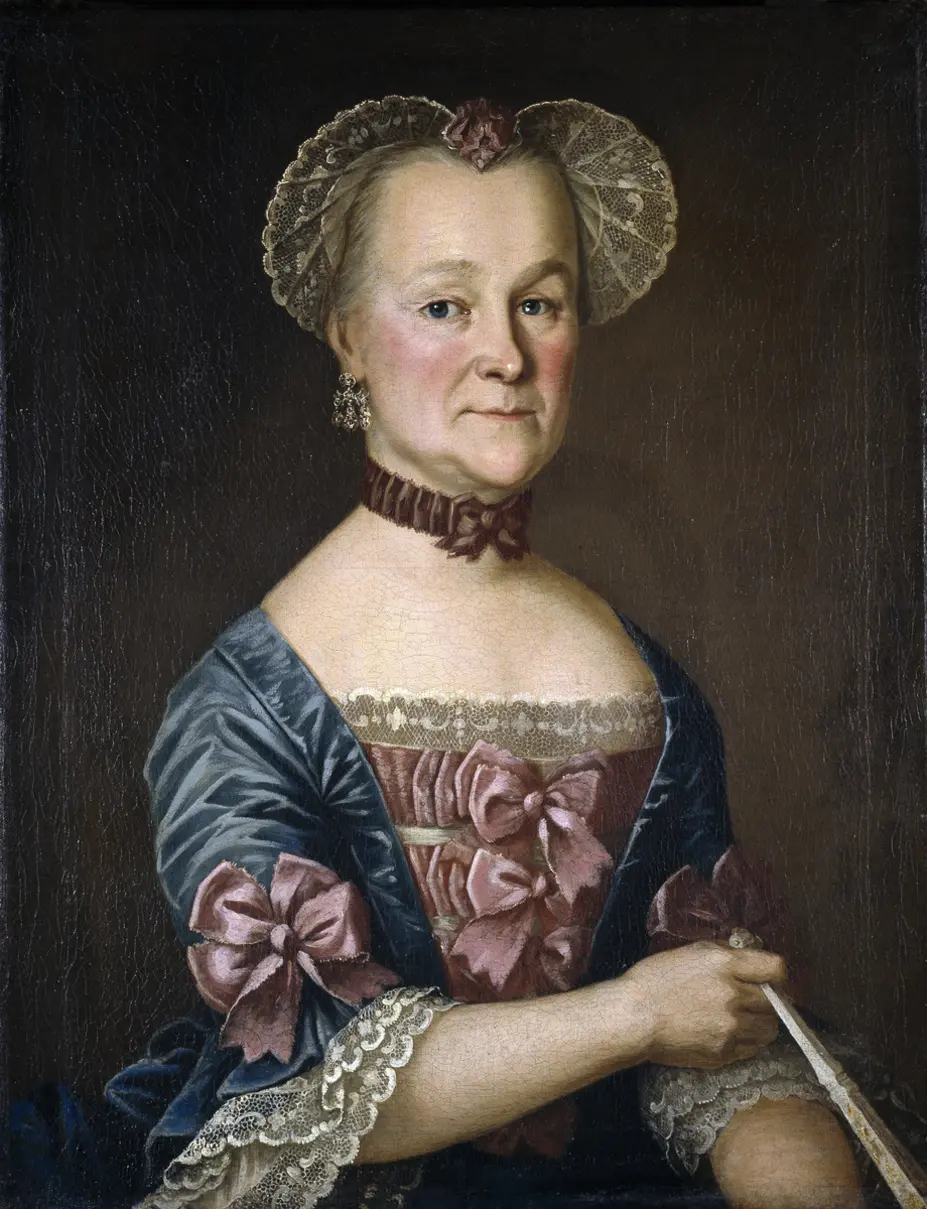
The building was commissioned by Per Hansson Sunn (d. 1774), one of the most important and wealthiest burghers in Helsinki. His father was Hans Sund, a merchant and sea captain active in the 1720s and 1730s. The family surname was changed during his son’s lifetime. Hans Sund was a skilled seafarer, serving as the captain of the City’s first long-distance merchant ship, the Die Stadt Helsingfors. The ship was originally a Russian merchant ship of the galliot type, meaning a three-masted round-bottomed vessel, but it was wrecked in the Uunisaari strait under the name St Simeon. The people of Helsinki restored the ship for their own use and renamed it. The process was not a cakewalk, as the Russians protested and the matter led to a diplomatic incident. The result was a 200-page record, which is kept in the archives of the magistrate of Helsinki City Archives. The record is difficult to read and partly ruined by moisture damage. The Die Stadt Helsingfors made Helsinki known at the Baltic ports – during the few voyages that it managed to make. The vessel made a couple of trips to Amsterdam but was wrecked off the east coast of Gotland in Östergarn.
Like the bourgeois of his day, Per Hansson Sunn was a multi-entrepreneur who built his fortune during the boom that began in 1747 with the construction of Viapori. Like many other bourgeois in Helsinki, Sunn became wealthy by delivering building materials and food to the fortress construction site. The deliveries were coordinated by the so-called procurement deputation established in 1747, in which Per Hansson Sunn was involved.
Sunn was also a pipe manufacturer. At the time, millions of pipes were produced in Europe, the main centre of production being Gouda, Holland. Chalk pipes were brittle disposable items that are found to this day in archaeological excavations and shipwrecks, sometimes in large quantities. Domestic pipe production was aimed at minimising import. The underlying factor was mercantilism, an economic policy that – sometimes unrealistically – aimed at trade surpluses.
Pipes were burnt in furnaces at high temperatures. Sunn’s pipe factory was in the backyard of the house. In Helsinki, this new manufacturing method had not yet been mastered, and the result was a city-wide fire that started at the pipe factory in 1761.
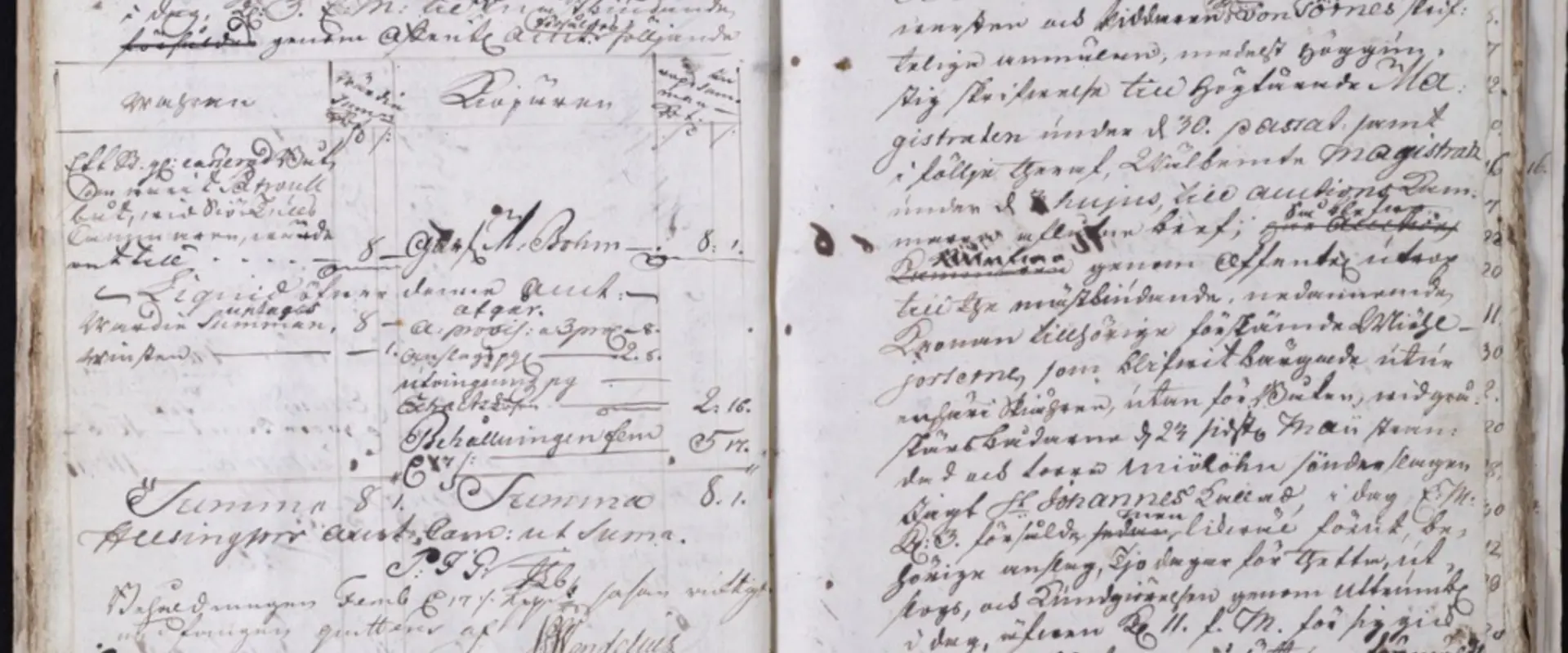
The position of diving commissioner in the Helsinki Diving and Salvage Company was important and lucrative for Sunn, as it supported his shipping company business activities. The diving company had the exclusive right to salvage the cargo of shipwrecked vessels. It was one of many monopolies in place in the 18th century. Once the cargo, the rigging of the vessel and other valuables had been recovered, they were auctioned off. This resulted in the emergence of two important source groups for seafaring accidents: the reports of the diving company and the minutes of the auction chambers.
Shipwrecks provided Sunn and his partners with cheap ship parts for their ships under construction. In a way, the accidents of foreign ships were strokes of luck for Helsinki. Particularly sought after was the rigging (gaffs, ropes, pulleys and sails) and, in the best case, the whole ship, as previously mentioned. St Simeon was not the only one of its kind. In 1754, the Norwegian ship Concordia was wrecked at the tip of Porkkala and was given the name Augustin Ehrensvärd by its new owner in Helsinki. The vessel was 120 lasts in size, making it rather large. (One last is 2.4 tonnes.) In general, Helsinki-based vessels were in the 50–60-last range, the smallest ships such as yachts were in the dozen last range. The largest vessels were 200–300 lasts, but they were an exception. In July 1765, the Augustin Ehrensvärd set out for Lisbon and Cadiz to pick up some salt, which was vital. The ship had a crew of 15, mostly of whom were from Helsinki and a few from Ingå, Porvoo and Hollola.
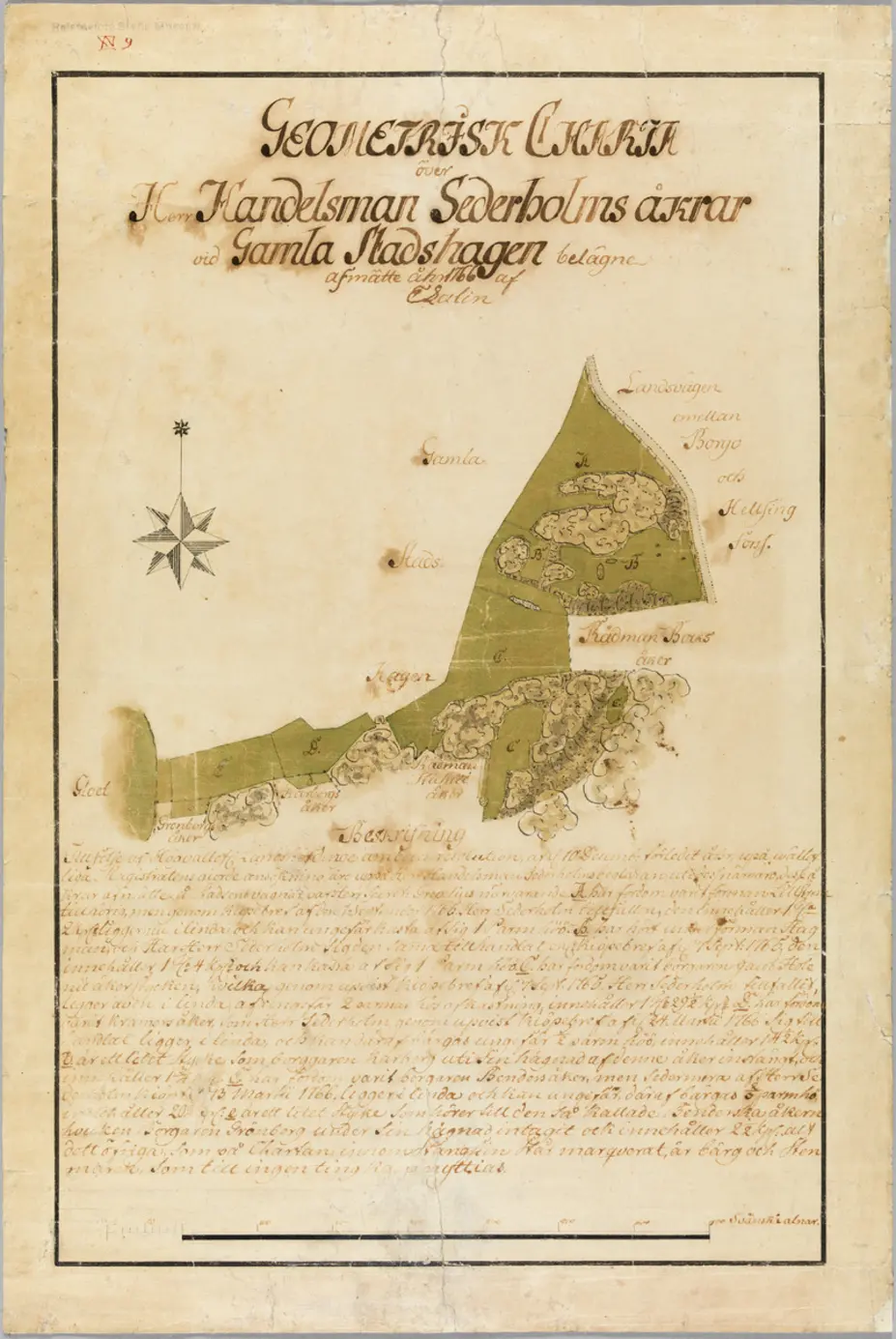
Johan Sederholm’s St Johannes
A short distance east of the Sunn House towards the Port of Helsinki is a well-known building, a bluish grey two-storey (478 square metres) building named after its owner, Johan Sederholm (d. 1805). It is the oldest stone building still standing in the city, dating back to 1757. The building has a large attic and a basement. It was used by the City for formal occasions and had guests including royalty.
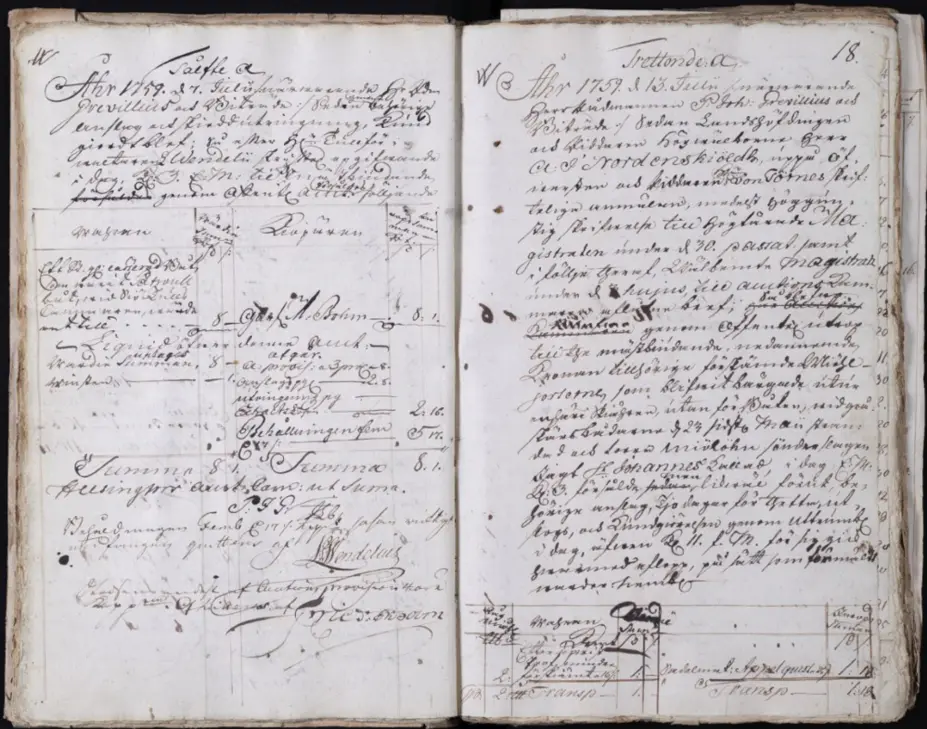
However, the Sederholm House was not the first stone building in the city. In the 1690s, merchant Torsten Burgman commissioned a stone house that eventually burnt down in a fire in 1808. Like Per Hansson Sunn, Johan Sederholm, the wealthiest and most influential burgher in the city, was involved in many other things as well as being a shipowner. The same year as the house was completed, Sederholm’s ship the St Johannes set out from the Viapori roadstead to Stralsund, Germany. Sweden had entered the Pomeranian War (1757–1762). An important but little known motive was access to the oak forests of Pomerania. Oak was needed for shipbuilding, especially for warships, and Sweden was running low on it.
The ship was carrying flour and shoes for the army. St Johannes made it to outside Tallinn but had to turn back due to headwinds and eventually ran aground off the coast of Helsinki. The location was the wide shallow area of Gråskärsbådan in the south-western part of the sea by Helsinki (the southernmost and last islet on the right of the route of m/s Tallink from Helsinki towards Tallinn). As the diving company towed the vessel off the rocks towards Viapori, it broke loose and drifted into the rocks of Kuivasaari, south of Vallisaari. By all accounts, the ship was in poor condition.
The case tells us four things: During the Pomeranian War, supply operations were poor and depended on ships from the native land far away, there was a shortage of oak, the performance of sailing ships was poor and Sederholm was probably stingy, as was typical of shipowners. Less-than-immaculate ships would do in transport operations for the kingdom. It was not worth sending the best ship to a war zone.
Old Town Hall
Going east of the Sederholm House, you will arrive at the Bock House. This is the former town hall of Helsinki. The yellowish three-storey neoclassical building was completed in 1763 at Aleksanterinkatu 20, which was called Suurkatu at the time. The house was originally built with a mansard roof, commissioned by merchant and magistrate Gustav Johan Bock (d. 1788).
Bock is also associated with shipwrecks and the salvage company, as captains and first mates of shipwrecked vessels, both national and foreign, would go to give a sworn maritime statement at magistrate hearings. Maritime declarations are an interesting source of information on seafaring practices. They describe in detail the vessel’s voyage, the weather, the speed of travel, the ship’s location and the measures carried out, such as sail reductions from departure to wreck. A few pages long, the maritime declarations are in Swedish, English or Dutch. Of course, when reading them, we must apply normal source criticism, i.e. take into account that the declaration was the captain’s statement, emphasising the overwhelming circumstances and how the crew had done everything in their power at sea. This was probably often the case, but the declarations never indicate that a serious mistake had been made through carelessness or that alcohol had been involved. I have not found a single mention of alcohol in these documents, although ships would always carry it.
An accident at sea was a setback of varying degrees, mitigated by the fact that the vessels were usually insured and the risk was shared by up to several dozen co-owners. Often the captain would also have a share of the cargo. Of course, a maritime declaration could only be provided when there were survivors to tell the story. Often the whole crew would survive.
There was usually no sign of vessels completely lost at sea, except perhaps a piece of rigging washed ashore or an empty ship’s boat. Ships lost on the high seas may come to light later due to anomalies on the seafloor detected by marine archaeologists, amateur divers or authorities. The search efforts are also supported by diving reports by the Helsinki Diving Company and maritime declarations from the register office archives.
Customs warehouse
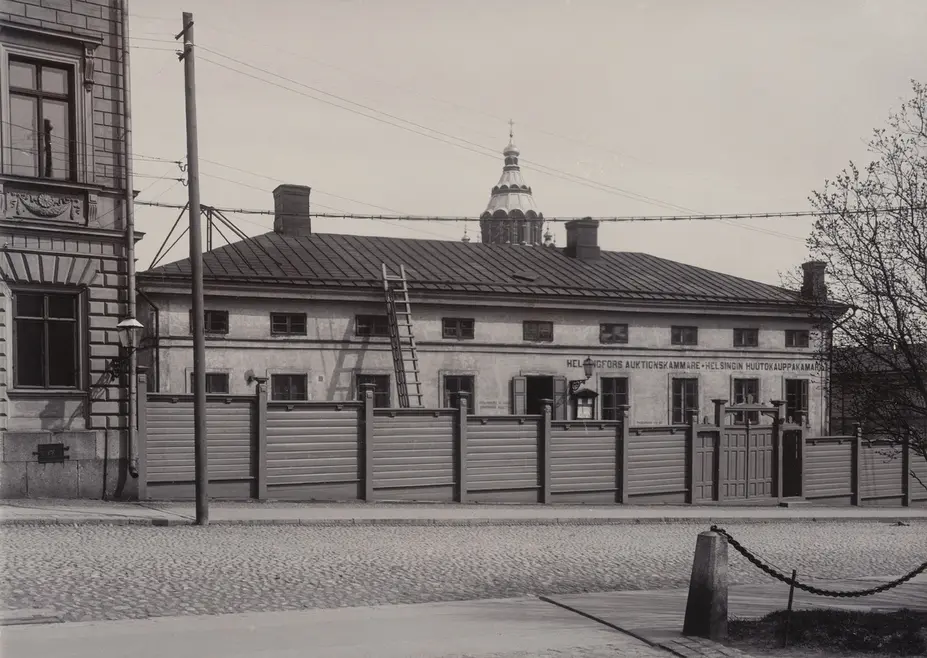
Continuing towards the harbour, you will arrive at Helsinki’s old customs warehouse. The neoclassical yellow building is the second oldest in the city, dating back to 1765. Ships arriving in the city had to pay the so-called great maritime toll based on the value of their cargo. The goods were taken to a warehouse, where they were inspected and duty was levied. Any goods recovered by the diving company were also reported to customs officials and taken to a locked facility in the custody of the customs authorities to await auction, making shipwrecked goods also subject to customs clearance. The goods had to be kept in good condition. They had to be prevented from spoiling or growing mould, as they were basically the property of their original owner. Later, an auction would be held, after which the commissioner would pay the compulsory customs duties, other smaller fees and the fees of the additional staff involved in the salvage work from the proceeds of the auction. The salvage operations would sometimes involve dozens of islanders. The original owner of the cargo would receive a share of the auction proceeds.
The Customs Warehouse is at an angle to the other buildings. It was originally intended to be part of a fortress wall around the city centre, designed by Augustin Ehrensvärd, which would also have consisted of ordinary buildings. This building was the only part of the plan to be actually implemented. Fortunately so, as one can imagine what kind of congestion would have resulted from a closed urban space.
From the port to the eastern end of Katajanokka
The customs warehouse was located by the old main harbour of Helsinki in Pohjoisranta. The harbour had a long quay where medium-sized ships could moor, but the shallowness of the quay meant that larger ships had to anchor in front of it, where they would be unloaded using barges. Smaller vessels would remain in Kaupunginlahti, now known as South Harbour. Pohjoisranta would be inaccessible during headwinds, forcing ships to drop anchor on the roadstead by Kruunuvuori. The city’s outermost roadstead (Miölö red) was located between Vallisaari and Isosaari. Ships would wait there for the right wind to enter the City port, particularly at night.
Opposite the port is Tervasaari (‘Tar Island’), which, as the name suggests, served as the City’s tar harbour. Tar was needed in the City’s shipyards, the most important of which was in Ullanlinna, by the Olympia Terminal opposite Valkosaari (Klippan). Because of the mercantilism that steered trade operations, Porvoo had no foreign trade rights from the 1630s onwards, and the city could only trade with domestic cities and deliver its important export product, tar, to Helsinki, from where it was forwarded on larger ships. It was transported via an inland route, mainly on barges, to Tervasaari in Helsinki. The cities were not equal and were at odds with each other – including Helsinki and Porvoo, understandably. Even in the second half of the 19th century, Katajanokka remained mainly a residential area of the poor. It was home to fishermen, sailors, City boatmen, peddlers and pilots, although they could not be counted as poor people.
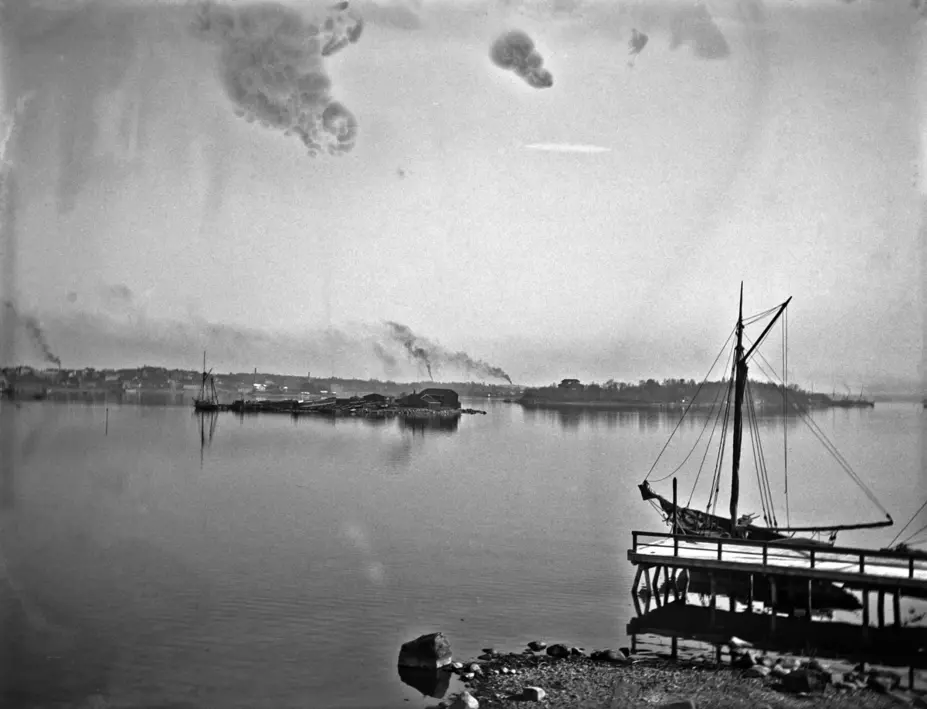
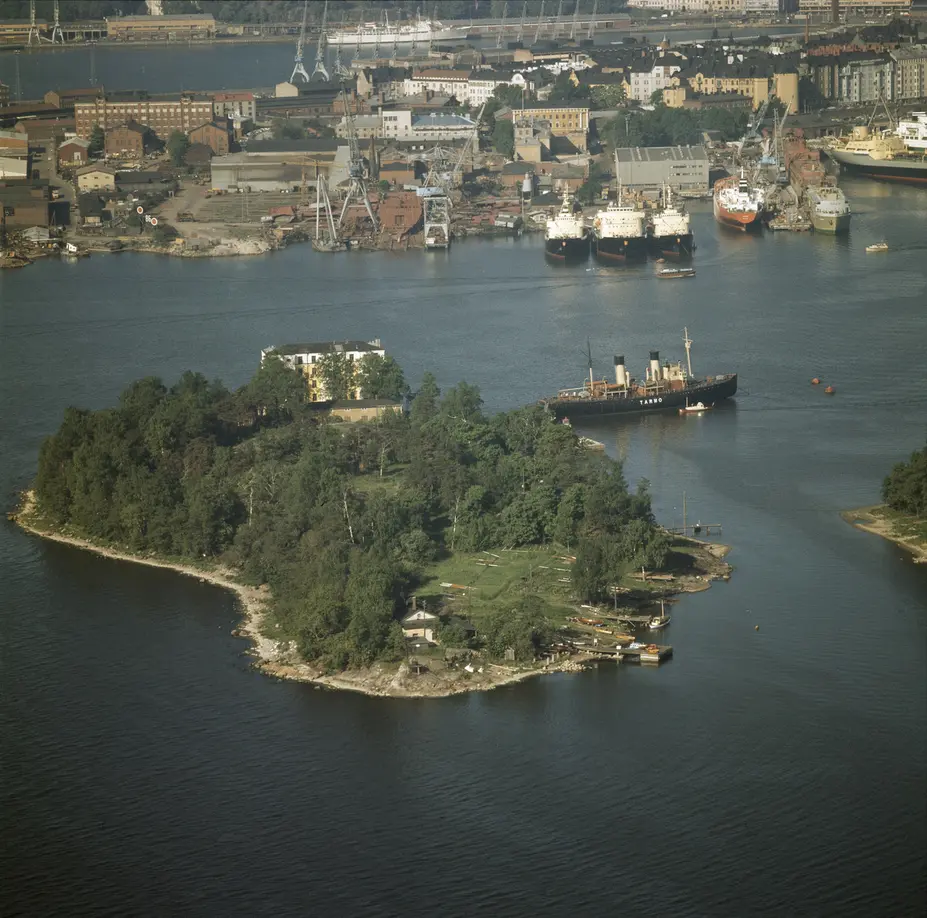
From the eastern end of Katajanokka, you can see three islands of importance for seafaring: Hylkysaari, Korkeasaari and Mustikkamaa. Until the 1750s, Hylkysaari was called Kalvholmen (Vasikkasaari, ‘Calf Island’) and featured common grazing land of the City. The name was then changed to Vrakö or Hylkysaari (‘Wreck Island’), reflecting the island’s new purpose and the city’s increasing seafaring activity in general, as well as the relatively short lifespan of ships. Vrakö was a disposal site for decommissioned ships and other wrecks. In a way, it is telling that the Maritime Museum of Finland operated on Hylkysaari from 1973 to 2007, before moving to Kotka. Hylkysaari had a shipyard in 1830–1881 and a pilot station in the early 20th century, as pilots moved from Vallisaari to Hylkysaari. Gas used by lighthouses and sector lights was also produced on the island. The Hylkysaari pilot barracks were completed in 1910.
The ballast of ships was (according to the rules) emptied onto Korkeasaari and Mustikkama, the shores of which still feature related sturdy mooring rings for ships. Thousands of foreign stones have been found on the island. They are from the ballast of ships from Germany, Denmark and England in the 17th and 18th centuries. The stones are mainly silica and limestone, but some are also porcelain, glass, brick fragments and coal. For ballast, ships wanted something as cheap but heavy as possible.
Archive sources
Helsinki City Archives
Official records of the register office
Name lists of Helsinki Seamen House 1764–1773. Ba:1.
Literature and other publications
Aalto, Seppo, Gustafsson, Sofia and Granqvist, Juha-Matti. Linnoituskaupunki. Helsinki ja Viapori 1721–1808. Helsinki 2020.
Alvik, Riikka, Granqvist, Juha-Matti, Huhtamies, Mikko and Tikka, Katja. Haaksirikot ja pelastusseurat 1700-luvun Itämerellä. Tieteessä tapahtuu 2015:4.
Hornborg, Eirik. Helsingin kaupungin historia II osa, Helsinki. Helsinki 1950.
Huhtamies, Mikko. Haaksirikkoja ja riskinhallintaa 1700-luvun Suomenlahdella. Ennen ja Nyt. Historian Tietosanomat. VOL 23 NO 1 (2023).
Huhtamies, Mikko. Hylkytavaran huutokaupat 1700-luvun puolivälin Helsingissä – Mikä laivoissa maksoi ja mitä haaksirikkodokumentit kertovat epäsuorasti itse onnettomuudesta? Nautica Fennica 2020.
Huhtamies, Mikko. “Kolme mailia Helsingin pookista merelle”. Onnettomuus ja onni. Kauppalaivojen haaksirikot ja pelastustoiminta Itämerellä 1600–1800-luvuilla. Historiallisia Tutkimuksia 279. Helsinki 2019.
Huhtamies, Mikko. “Vedenalaiset konstit. Captain mechanicus Mårten Triewald ja valtakunnallisen pelastusmonopolin synty Ruotsissa”. Onnettomuus ja onni. Kauppalaivojen haaksirikot ja pelastustoiminta Itämerellä 1600–1800-luvuilla. Historiallisia Tutkimuksia 279. SKS (2019).
Maintenance and development plan for Mustikkamaa. Publications of the City of Helsinki Public Works Department 2016:1.
Mäntylä, Ilkka: Porvoon kaupungin historia II 1602−1809. Porvoo 1994.
Tikka, Katja. Apua merihädässä – vai liiketoimintaa? Ruotsin Sukellus- ja pelastuskomppanian toiminnan ensimmäiset vuosikymmenet 1729–1760. Master’s thesis. University of Helsinki 2014.

