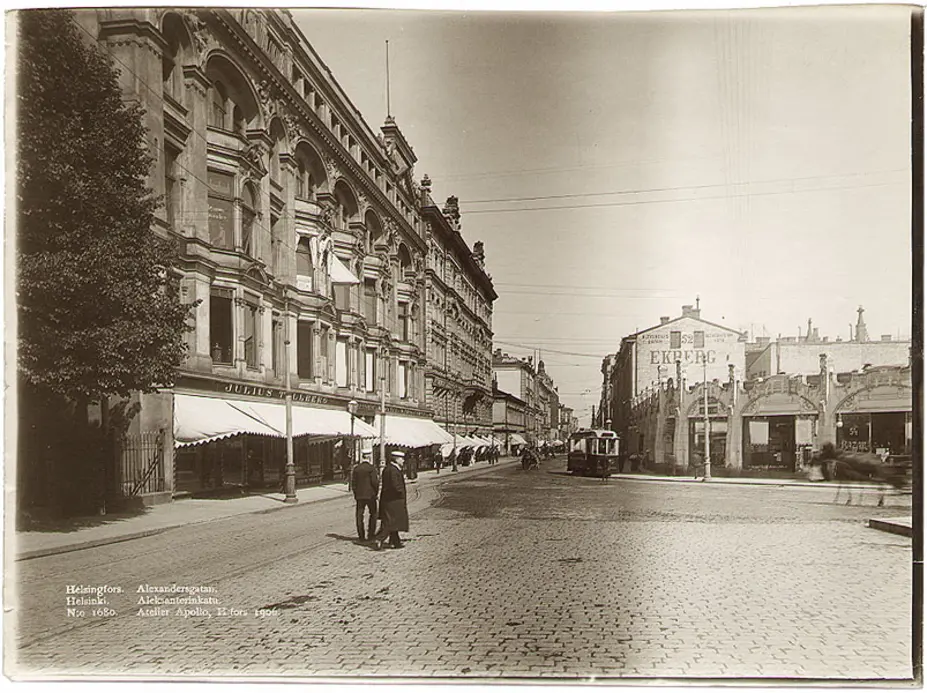
On one morning in February 1889 Helsinki awakened to exciting news: the engineer K. E. Ståhlberg had opened a new, modern photographic studio at Aleksanterinkatu 17. In the studio he used and sold the most recent technical inventions, photographic devices (cameras) and equipment, all imported from abroad.
The city’s inhabitants and an increasing group of amateur photographers in Helsinki were enthusiastic. But for established photographers this upstart became an unwelcome competitor. Ståhlberg’s advantage was new technology, a fine and spacious studio, a vast assortment of products and cheaper prices.
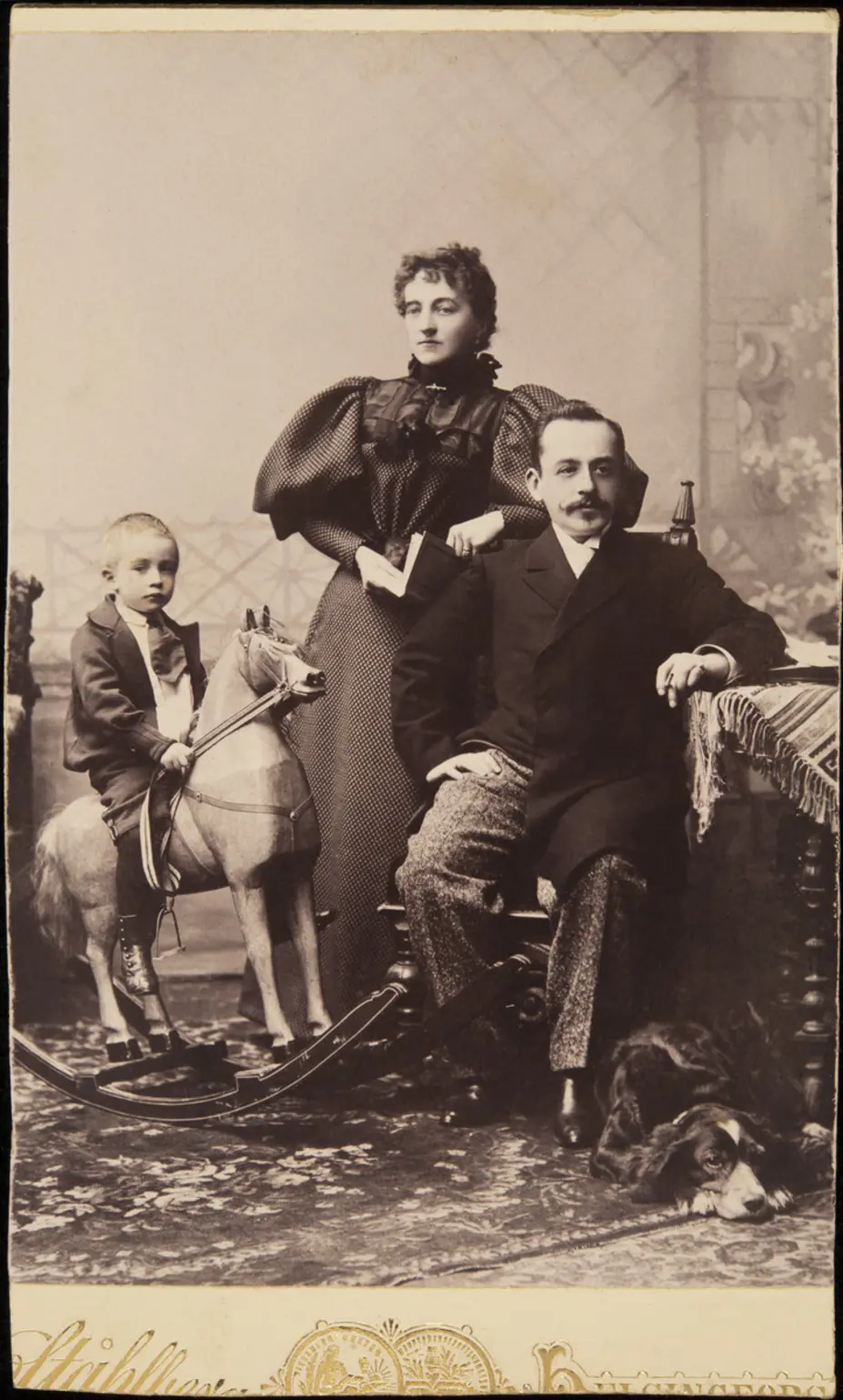
Both residents in Helsinki as well as tourists visited the studio to be photographed, although many also walked up the stairs to the fifth floor only out of curiosity. Some visitors became so interested that they started to take photos themselves. Among them was the famous photographer Constantin Grünberg (1891–1973). He visited Ståhlberg’s studio already aged four in 1895, together with his parents Eugenie och Constantin Grünberg – and the family dog.
From Oulu to Helsinki
Karl Emil Ståhlberg (1862–1919), commonly known as K. E. Ståhlberg, was born in Kuhmoniemi in Oulu province, now Kuhmo in Kainuu. His father had died early, so his elder siblings financed his education. Ståhlberg graduated from the Swedish-language high school in Oulu and studied from 1883 at the Polytechnical Institute in Helsinki.
After graduating as a civil engineer, he travelled to Sweden, Denmark and Germany to study more photography. In the spring of 1888, he married Aurora Lindgren from Oulu and the young couple settled in Helsinki. Some of Ståhlberg’s siblings were employed in his studio or helped in the household and took care of the children.
Breaking traditions and setting trends
The capital of Finland opened the door to Europe for K. E. Ståhlberg, but he chose to develop his multiple activities in Helsinki. When he opened the first photographic studio, he broke against several traditions at the same time. Future photographers were expected to learn from established masters for many years before they were allowed to start their own studios.
But Ståhlberg was not patient. He took a shortcut and travelled abroad where nobody expected him to wait for his turn. Helsinki and the other photographers soon learned that young Mr. Ståhlberg chose his own paths and cared nothing for their opinions. He was quick-tempered but also possessed humour and self-distance. On a picture he is pretending to throw a box with photographic equipment into the Imatra Rapids.
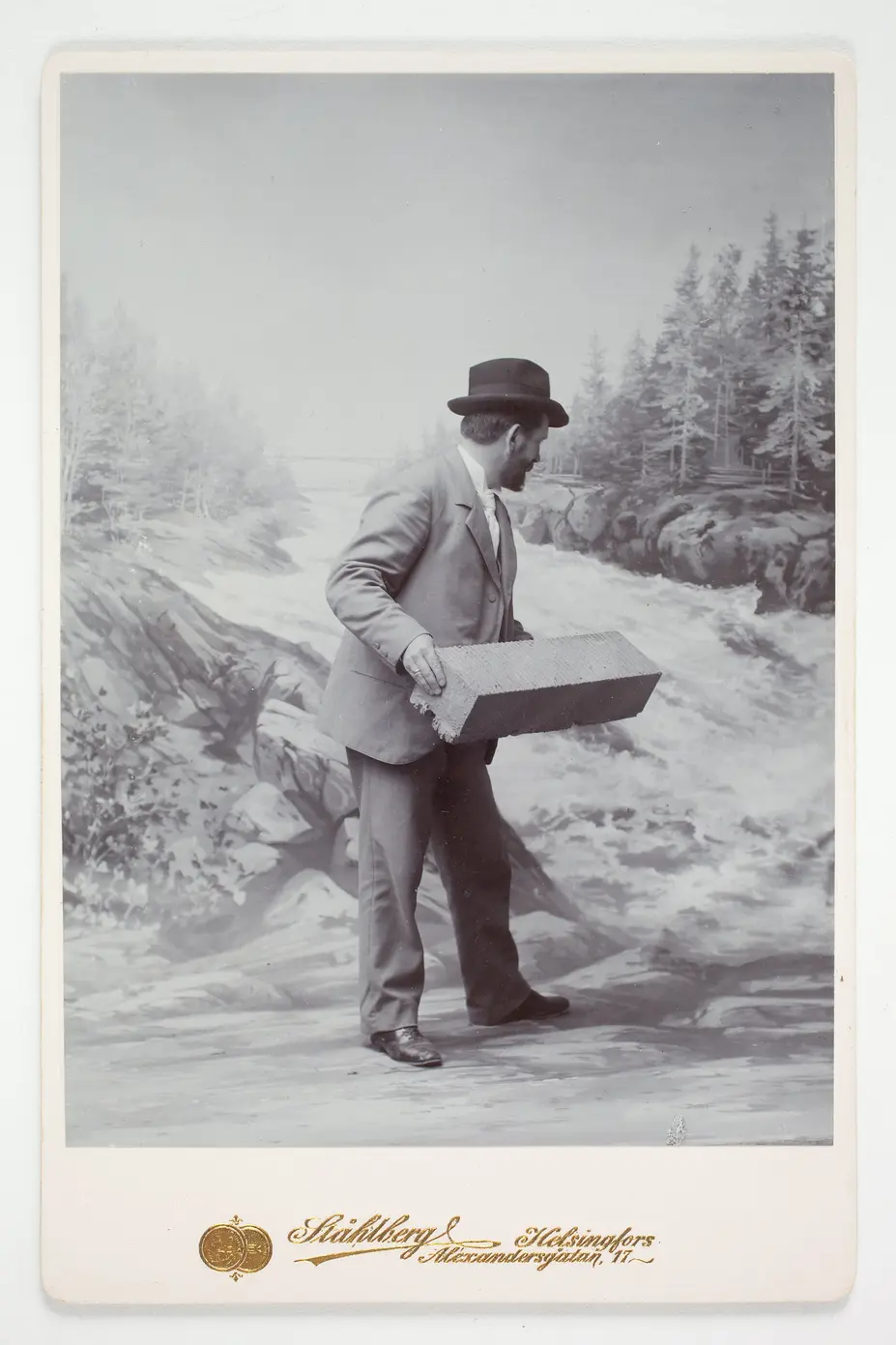
Ståhlberg was a restless soul who always had to be first or at least the leader in his trade. When the competition grew too big, he changed his line of business. During the following three decades he would surprise his contemporaries many times, break customs and set new trends.
Technical devices and machines
K. E. Ståhlberg was however much more than merely a photographer. He proved to be a versatile man, passionately interested in technical devices and machines and all kinds of new inventions. Ståhlberg filmed and produced the first Finnish films, established the first cinema in the country, and imported the first cars and motorcycles to Finland.
When he drove at high speed (according to contemporary observers) with a new car through the streets of Helsinki, all pedestrians and any other traffic stopped. Horse-drawn trams operated already since 1891 and in 1900 electrical trams were introduced, but both were much slower than Ståhlberg’s “speed demons”.
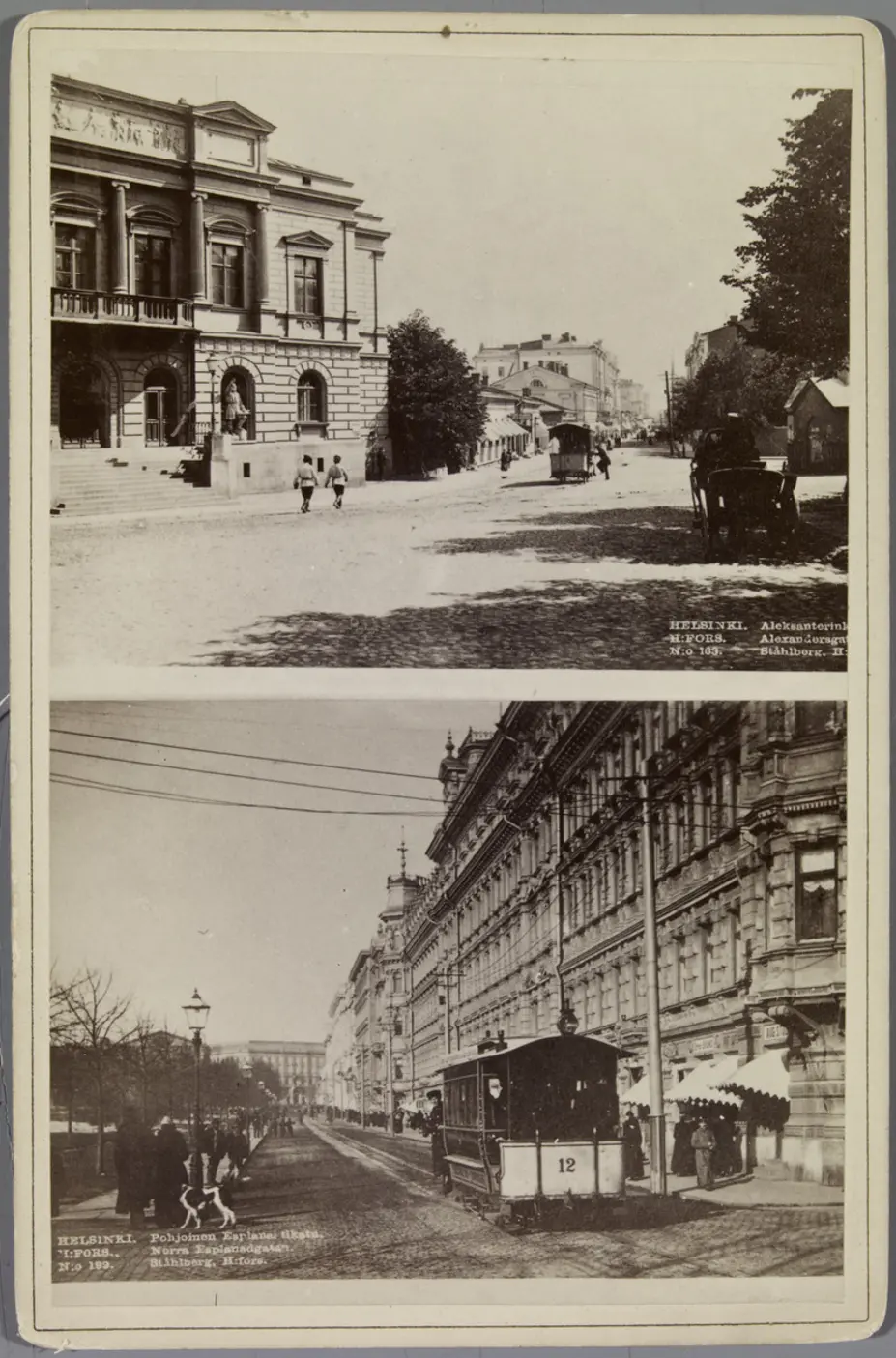
Portraits
The photographic studio K. E. Ståhlberg became so popular that the owner soon could buy up other studios and open branches in towns around Finland. Exchanging photographs with relatives, friends and schoolmates became the fashion, and many people bought albums for collecting portraits.
Clients of photographic studios dressed up in their finest clothes and chose backdrops with great care. The background of the photo was important, because it told about the persons and their position in society, opinions and tastes. Weddings, baptisms, anniversaries and other celebrations were immortalised in pictures. Many photographs of newly wedded couples were taken in Ståhlberg’s studios around the country.
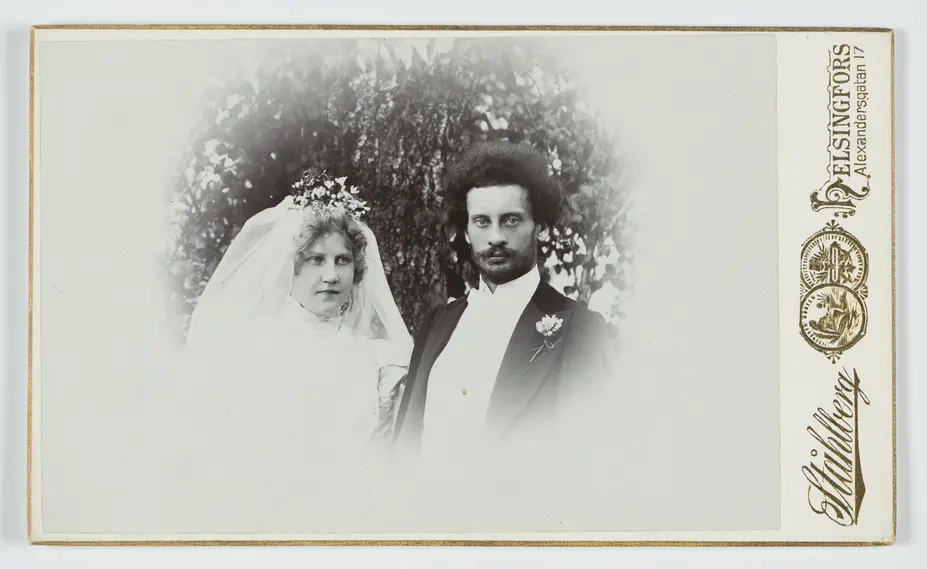
The number of baby pictures increased in the 1890s. This was partly due to falling photo prices but also due to the development of technology. Earlier a person had to stand or sit absolutely still for a successful picture. Young children seldom managed to stay still long enough.
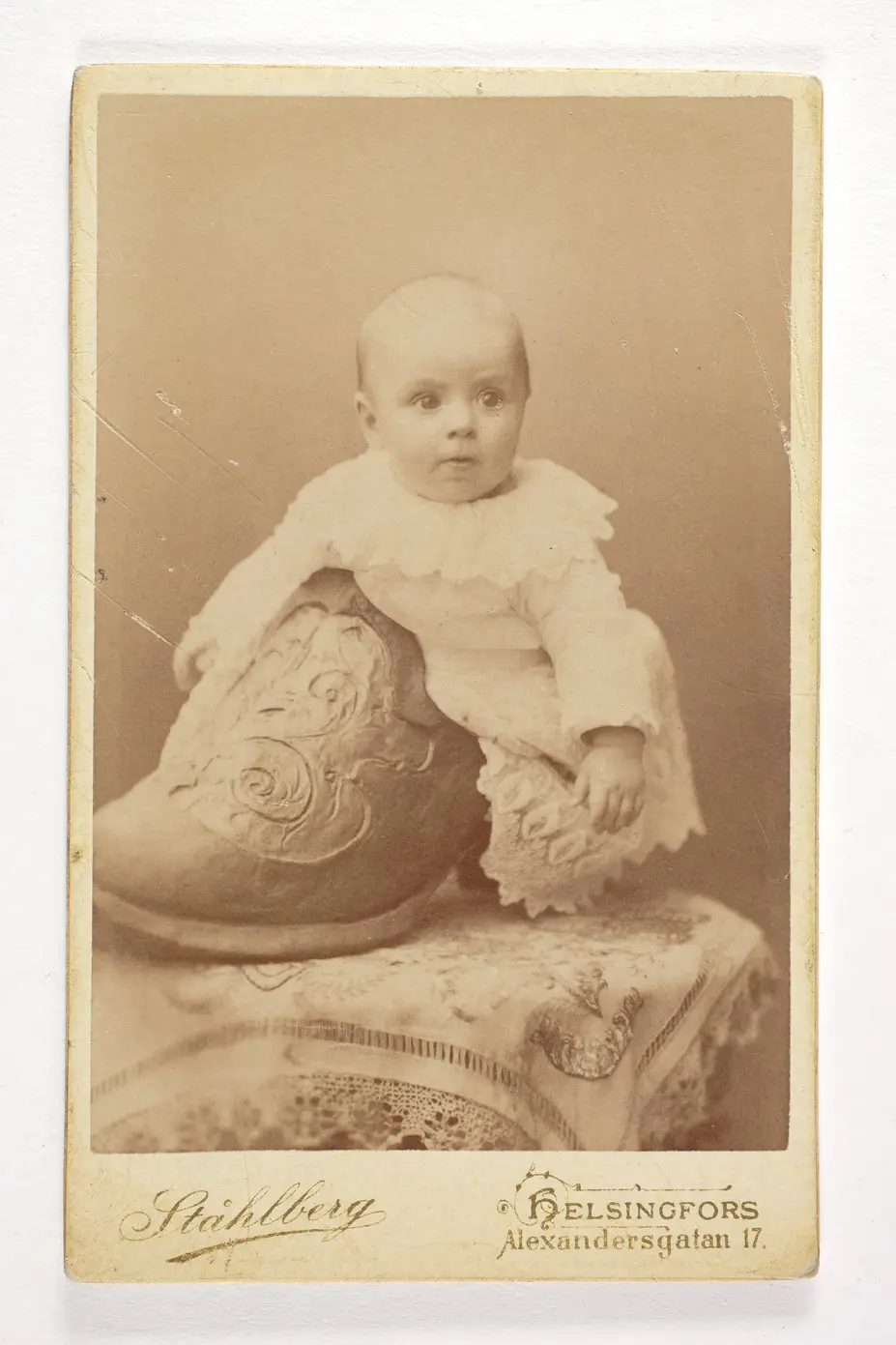
Events
Famous persons were often photographed on special days, such as birthdays or other important events. K. E. Ståhlberg and his photographers were present when the famous philanthropist and socialite Aurora Karamzin (1808–1902) celebrated her ninetieth birthday in 1898. The funeral of the famous writer and historian Zacharias Topelius (1808–1898) and other historical events were also documented. The photographs were then sold in the studios as pictures or postcards.
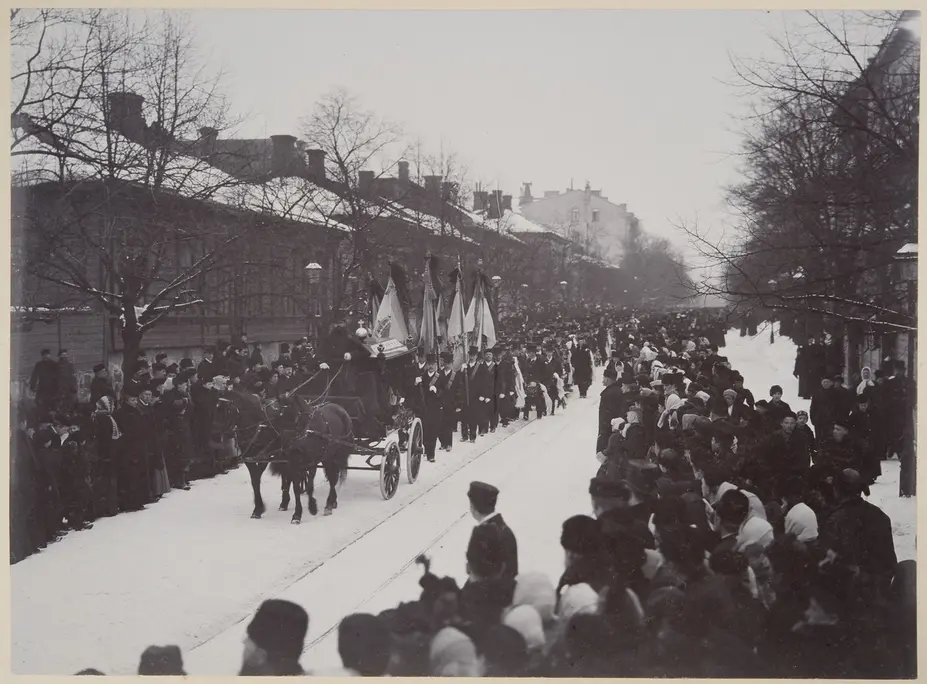
The photographers were also present when dignitaries and famous persons visited Helsinki, at the university conferment ceremonies, exhibitions and other events. The pictures contributed to the distribution of experiences and news about events in the city.
During the winter of 1892, people would visit for example the illuminated snow sculpture Frost by the artist Emil Wikström (1864–1942). Wikström created several monumental statues in Helsinki, among them the bear in front of the National Museum, the statue of Elias Lönnrot and J. V. Snellman in front of the Bank of Finland, and Lyhdynkantajat (‘The Lantern Bearers’) on the facade of Helsinki central railway station.
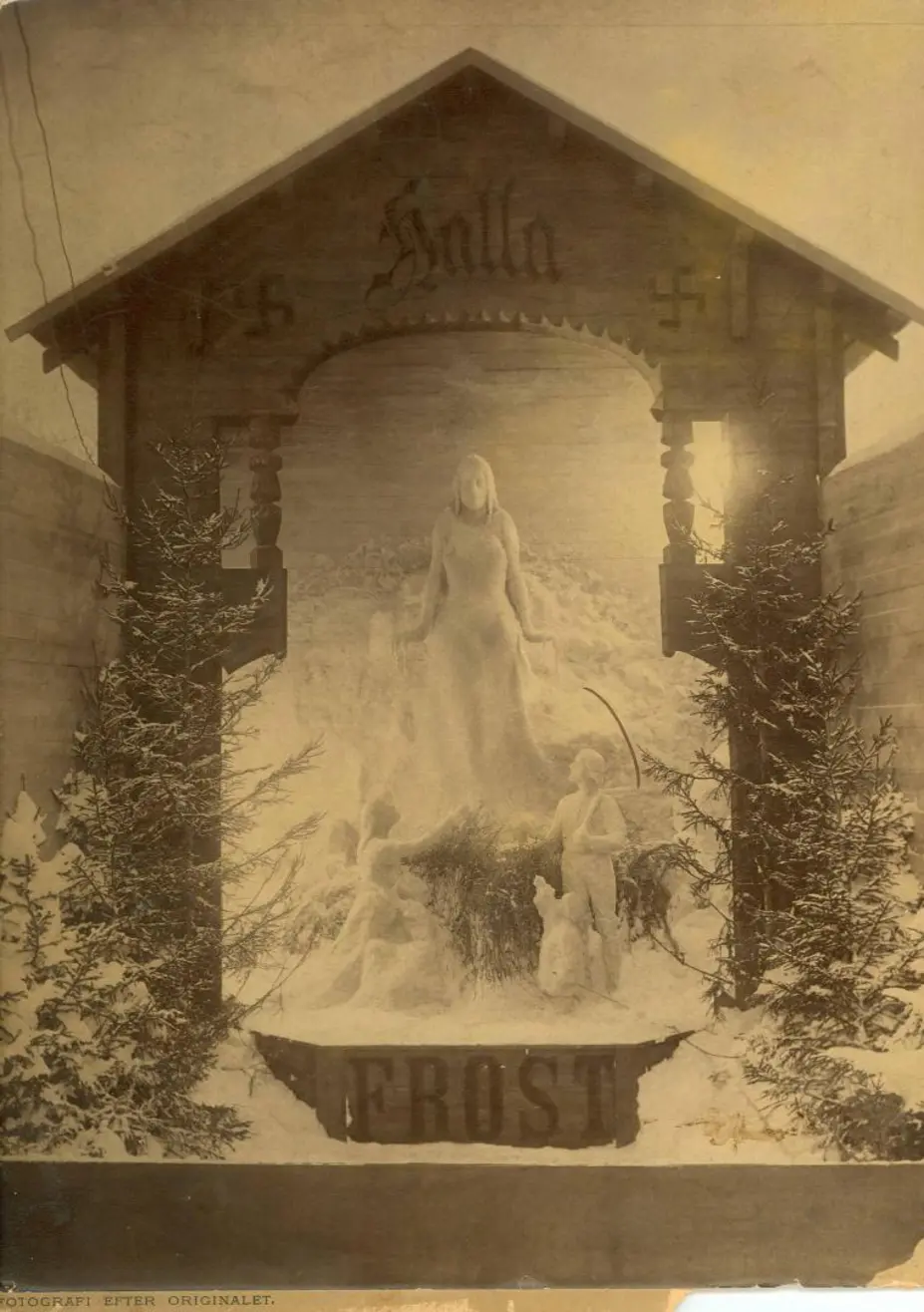
Celebrations and group photos
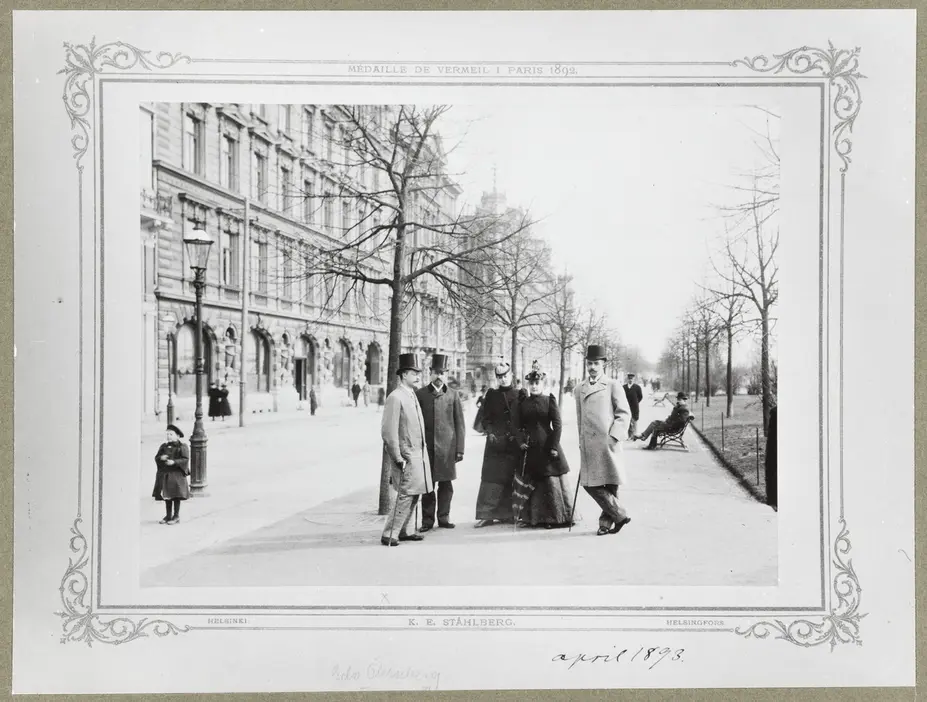
From the 1890s, institutions and authorities more frequently invited photographers to take pictures of groups and celebrations. The Estates of the Diet, university, state and municipal officials, editorial boards of newspapers, cultural actors, organisations and industrial workers all wanted to be photographed. Friends also wished to be photographed together in the studio or outdoors.
Separate portraits could be collected for a large picture in the photographic studio. Families, authorities and companies often ordered big posters with portraits and names as commemoration or for anniversaries. The whole staff of the Bank of Finland was photographed for the 85th anniversary of the bank.
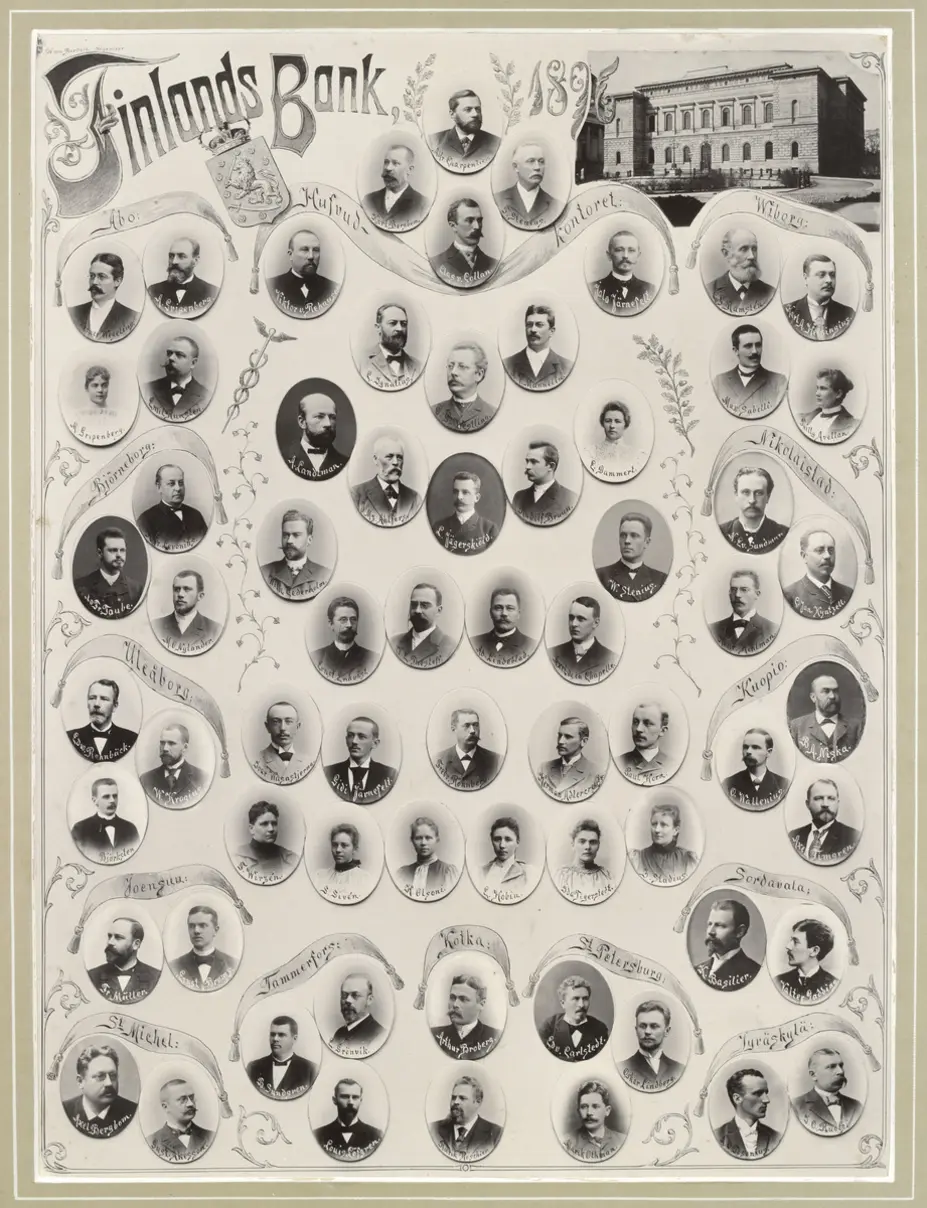
Finnish landscapes
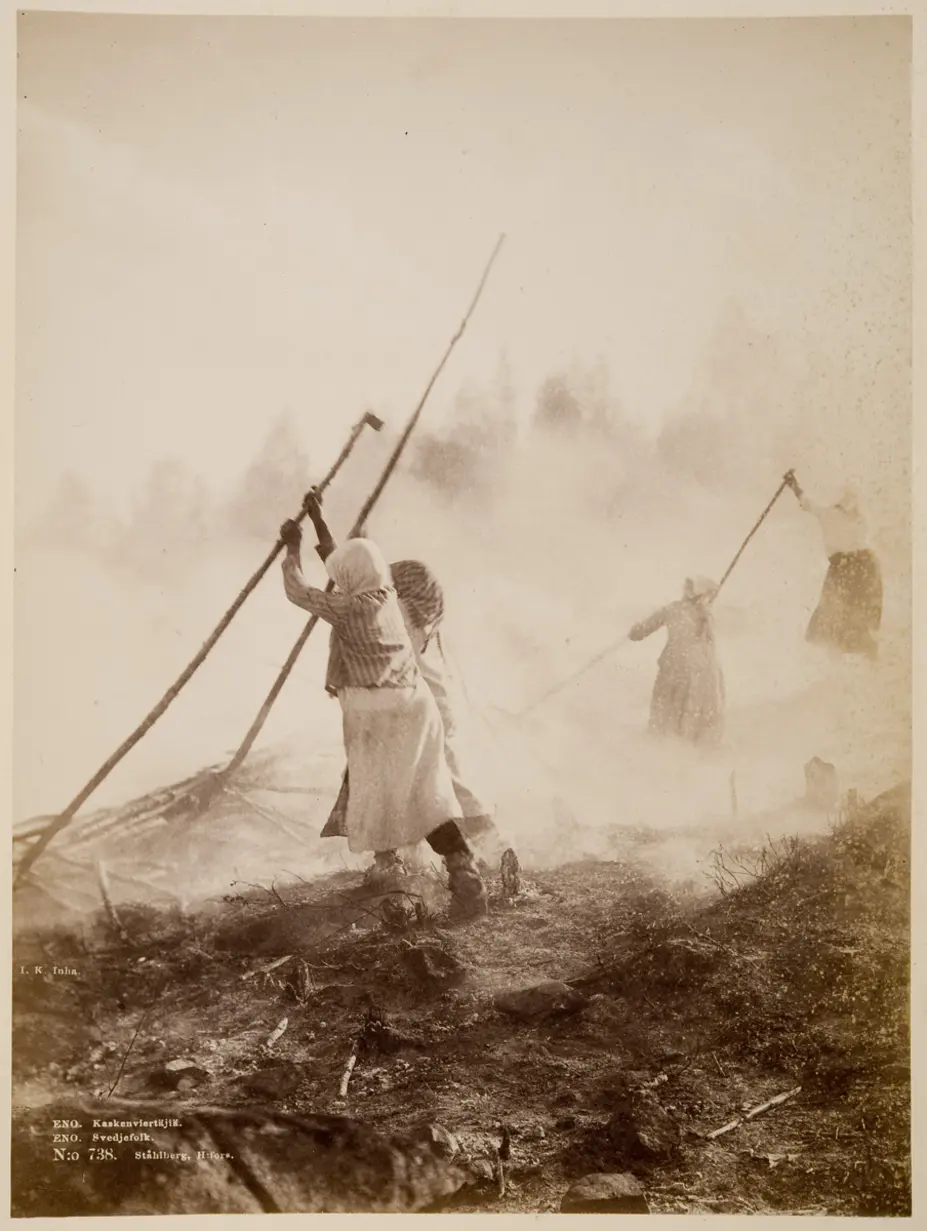
National awakening at the end of the nineteenth century became a lucrative niche for Ståhlberg. Customers wanted to be photographed in front of Finnish landscapes and buy Finnish postcards and pictures, so Ståhlberg quickly sent out photographers around Helsinki and Finland for new pictures.
Several famous photographers began their careers in Ståhlberg’s studios or found understanding and funding for carrying out their photographic ideas. The photographer, journalist and writer I. K. Inha (1865–1930) journeyed by bicycle through Finland on behalf of Ståhlberg, photographing landscapes and people in the 1890s.
Awarded in Paris
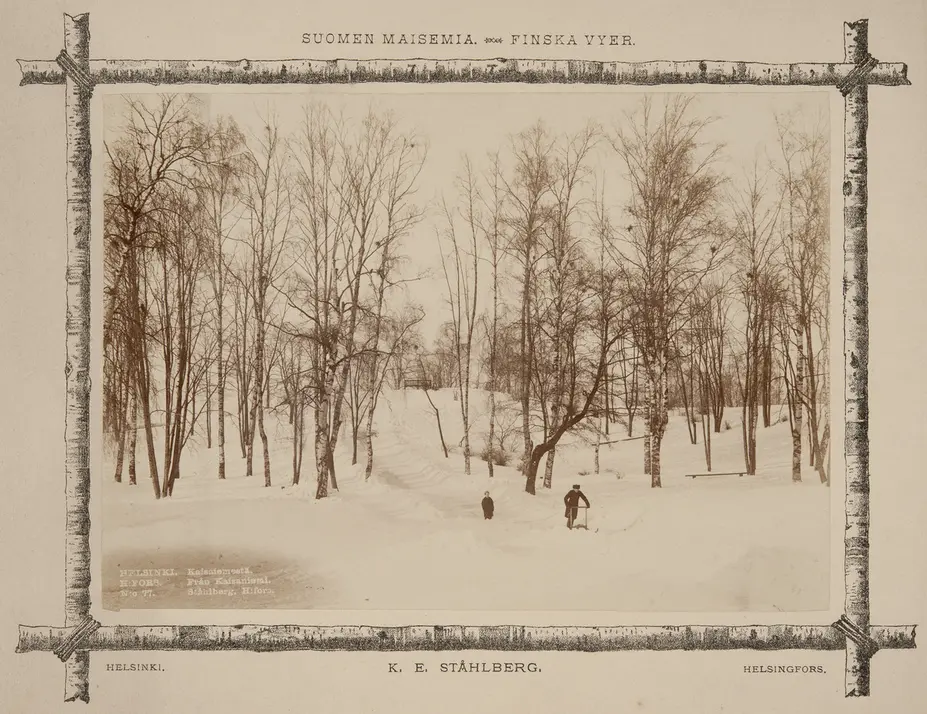
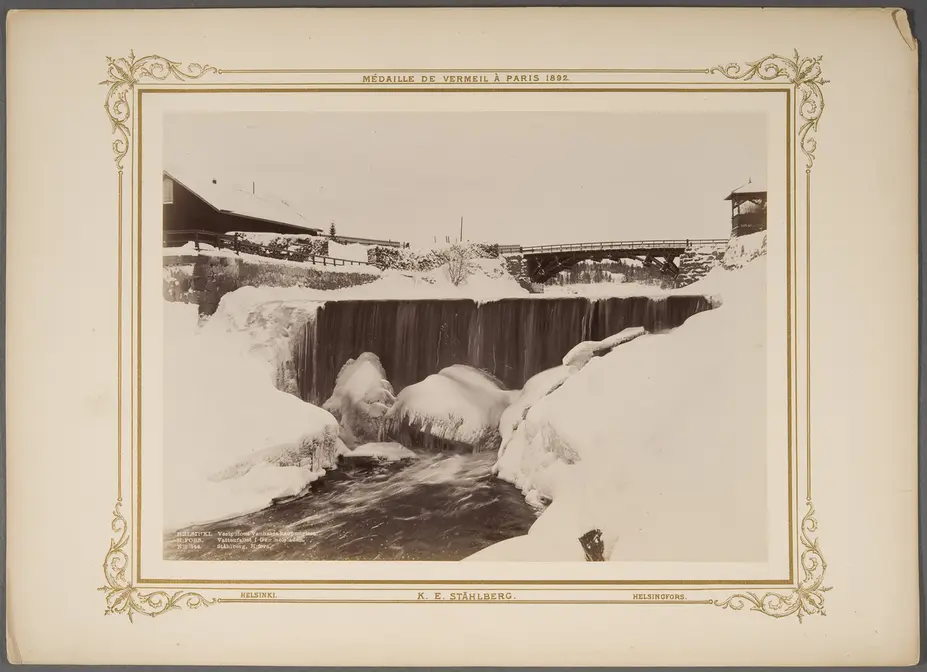
Ståhlberg’s photos and later also films were often used as advertisements abroad to promote Finland as a tourist destination. In 1892, K. E. Ståhlberg’s pictures were awarded at the first photographic world exhibition in Paris. The Finnish landscapes and especially wintry images were perceived as very exotic. Tourists and visitors can still today be surprised that it is possible to ski or skate within metropolitan Helsinki.
Family
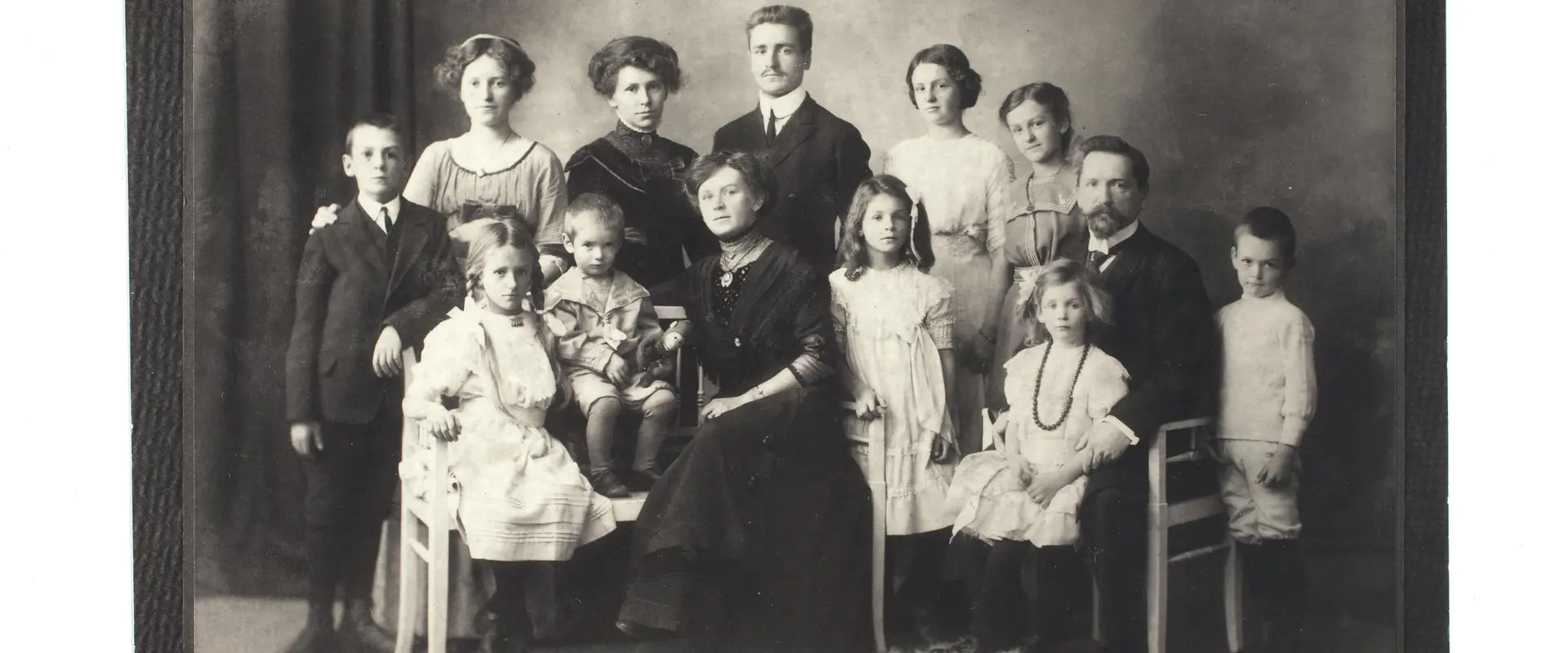
In the spring of 1896, Ståhlberg’s wife Aurora and one of their five children died of illness. In the summer Ståhlberg travelled to Hanko and met there a young, rich and beautiful Polish-Siberian heiress, Sonja Gerasimoff. They married in November the same year. Sonja became his closest co-worker, muse and financier. They had seven children together.
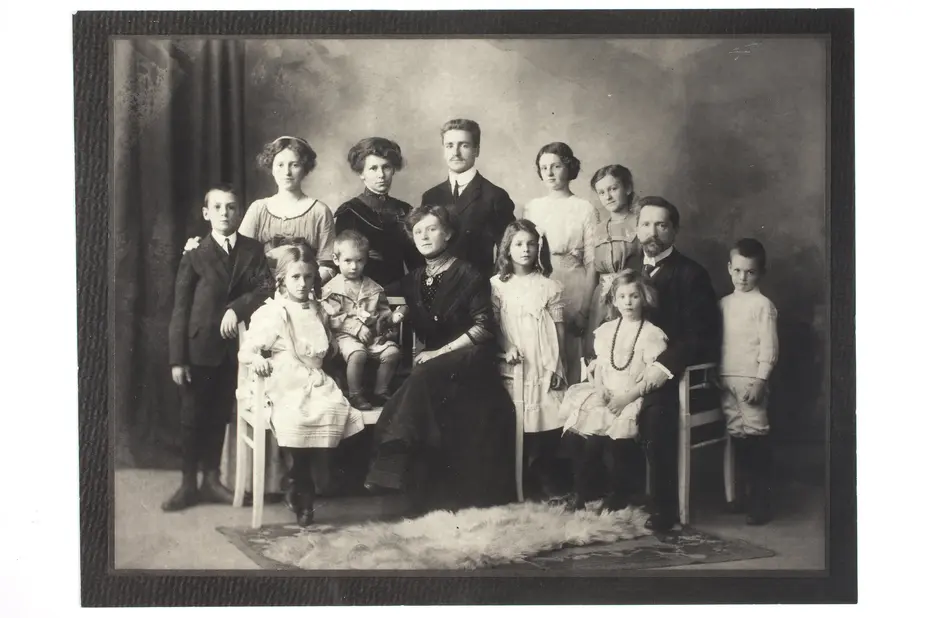
The Ståhlberg family now became cosmopolitan to a high degree. International guests who spoke French, German, English, Russian or Nordic languages often visited. K. E. Ståhlberg also had several foreign employees in his studios. His older children went to Finnish and the younger to Swedish schools, but all were at least bilingual. Sonja spoke seven languages.
Excentric Karl Emil, elegant Sonja and the eleven energetic children became a favourite subject for talk in the Finnish capital. The Ståhlberg family had what we today would call entertainment value.
Meeting points
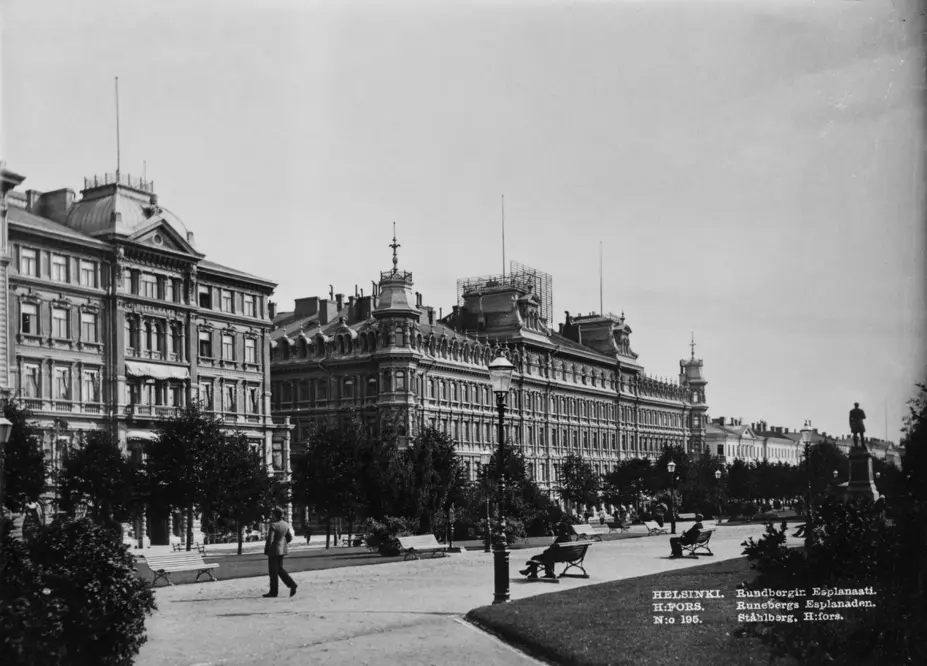
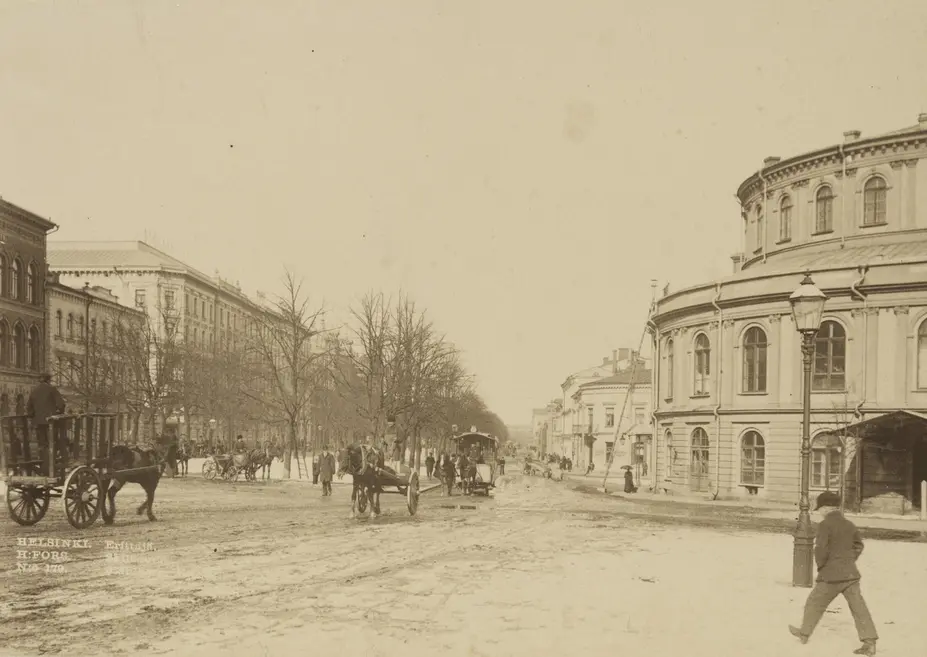
The Esplanade was a place where the inhabitants of Helsinki used to stroll, exchange gossip, meet in Café and Restaurant Kappeli (established 1867), and keep an eye on the newest fashion displayed by Sonja Ståhlberg after her latest trip to Paris. The children met with friends and acquaintances over language and cultural barriers. The statue of national poet J. L. Runeberg was a meeting spot long before the department store Stockmann was built, and “Stocka’s clock” became a popular meeting point.
Other statues were not that popular meeting points, but they had historical significance. The statue of the Russian tsar Alexander II was inaugurated in April 1894. In March 1899, the photographers took pictures of the “sea of flowers” and the demonstrations expressing the Finnish protest against the state Russification policy. Censorship was strict, but photographers used various techniques and angles to reflect the atmosphere and opinions.
-
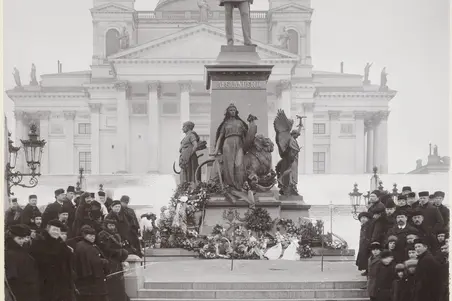
The statue of Alexander II in 1894 and 1899. The later picture shows how the figures below the statue seem to “drown” in the oppression. Photo: Finnish Heritage Agency / K. E. Ståhlberg -
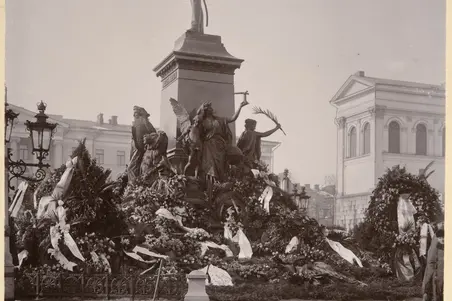
The statue of Alexander II in 1894 and 1899. The later picture shows how the figures below the statue seem to “drown” in the oppression. Photo: Finnish Heritage Agency / K. E. Ståhlberg


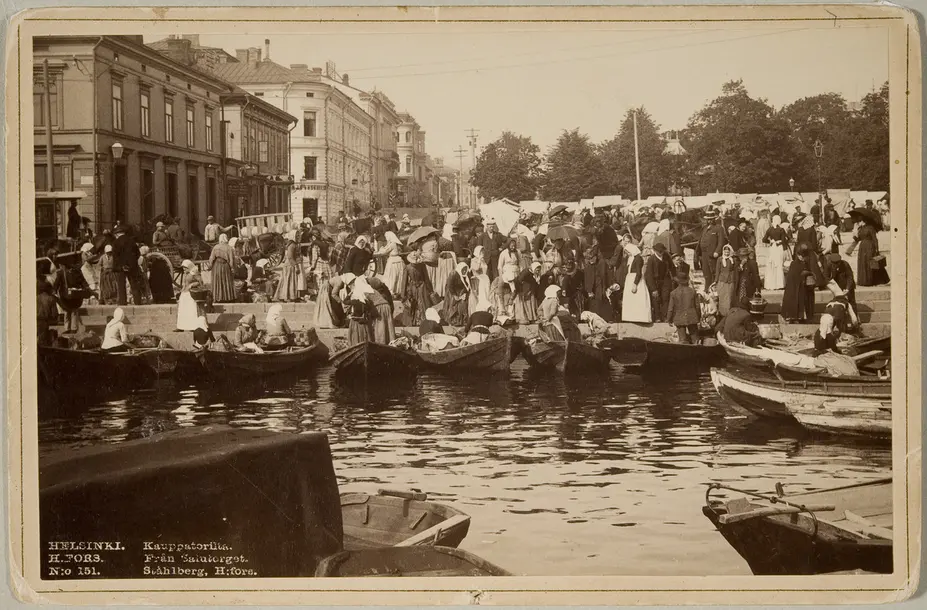
The inhabitants also met at the Market Square where a lively commerce took place. Sonja used to buy fresh vegetables and talk with the “Russian crones” who sold at the square. Although the Ståhlberg family had servants like other affluent families, the responsibility for a functioning everyday life with eleven children fell on Sonja. K. E. Ståhlberg was often away on trips or stayed the whole day in the studio and sat through the evenings at late business dinners.
A changing city
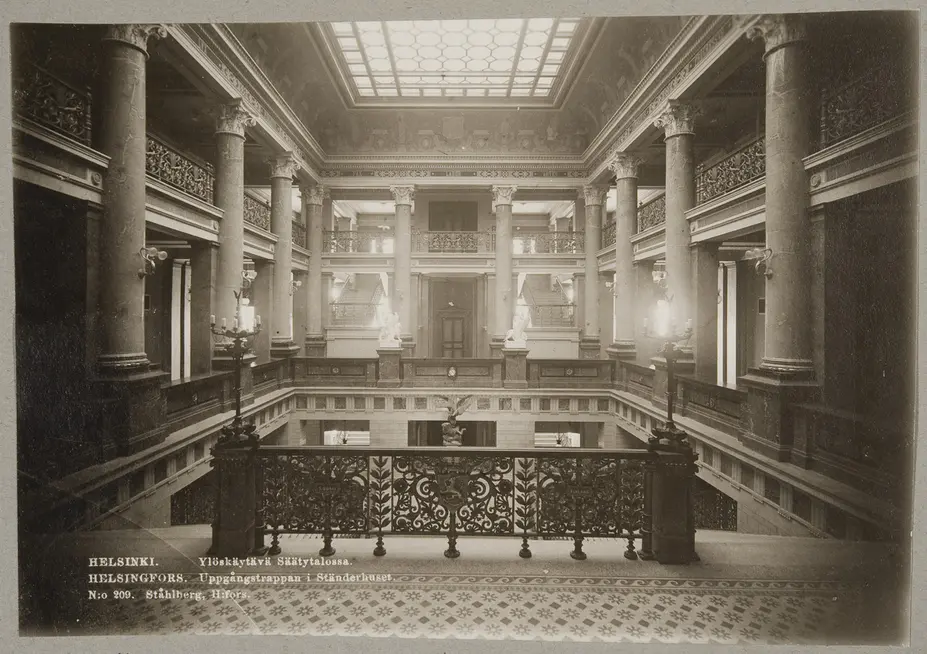
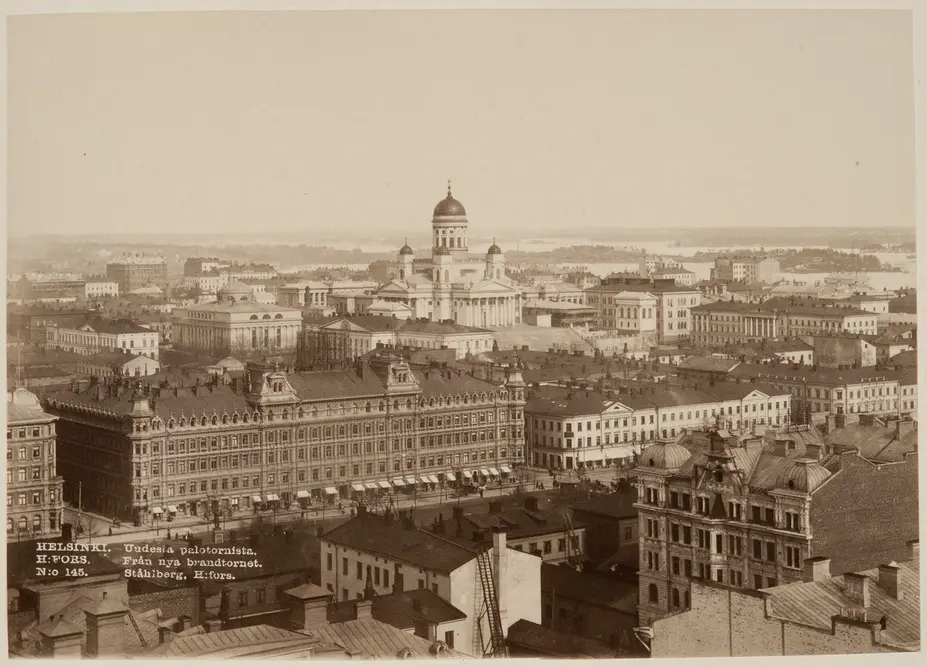
Around 1900 the centre of the Helsinki expanded and developed. Photographers walked around the city during all seasons with their cameras. They took pictures from both outside and inside important buildings, such as the Finnish House of Nobility, House of Estates, Imperial Palace (now Presidential Palace), National Archive, University and University Library, Student House, Polytechnical Institute and the Normal Lyceum school. Sufficient light indoors was crucial for a successful photograph.
The Ståhlberg family was not religious and perceived churches mostly as landmarks. Pictures were taken of the S:t Nicholas’ Church (now Helsinki Cathedral), S:t John’s Church, the German church, and the two Orthodox churches, Uspenski Cathedral and Holy Trinity Church. K. E. was officially Lutheran, but Sonja and he were married in the Uspenski Cathedral, because Sonja was Orthodox.
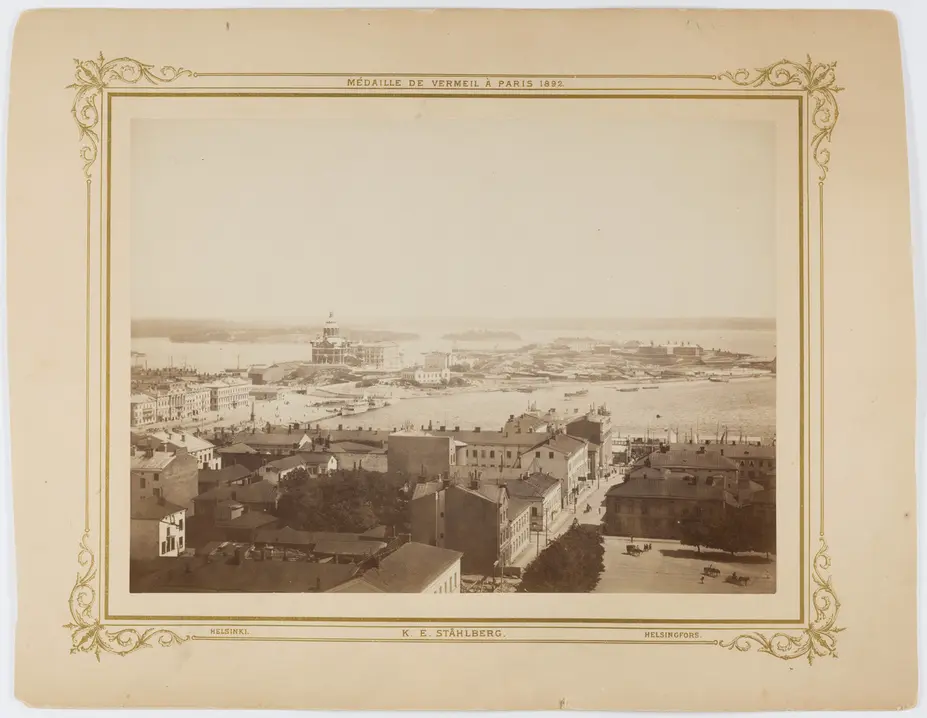
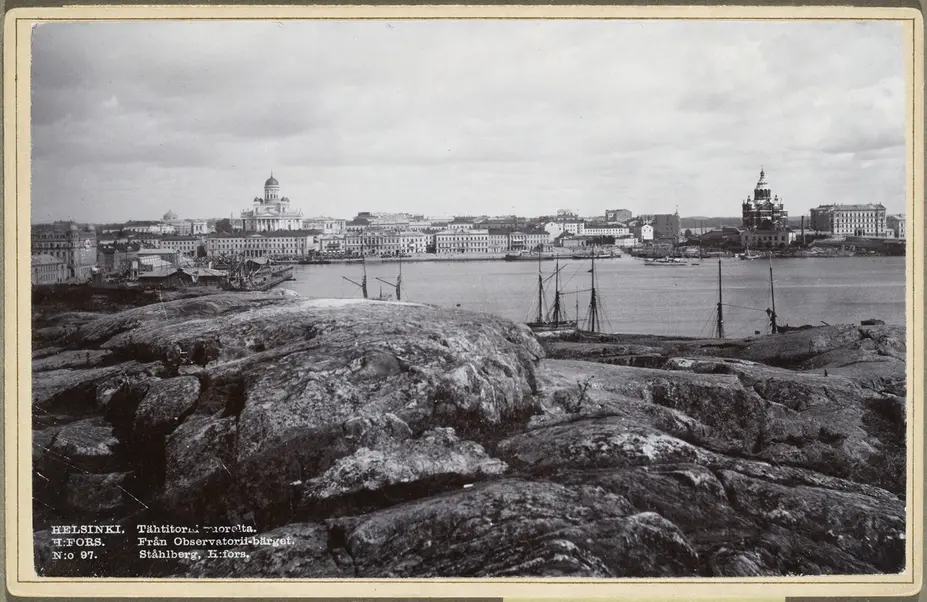
As the city grew, also the demand for further locations for relaxation, entertainment and recreation increased. Summers offered many possibilities for outdoor activities, visiting attractions and exhibitions, or for participation in events and festivals. When weather permitted in winter, inhabitants could ski, skate on the ice or sled on Tähtitorninmäki.
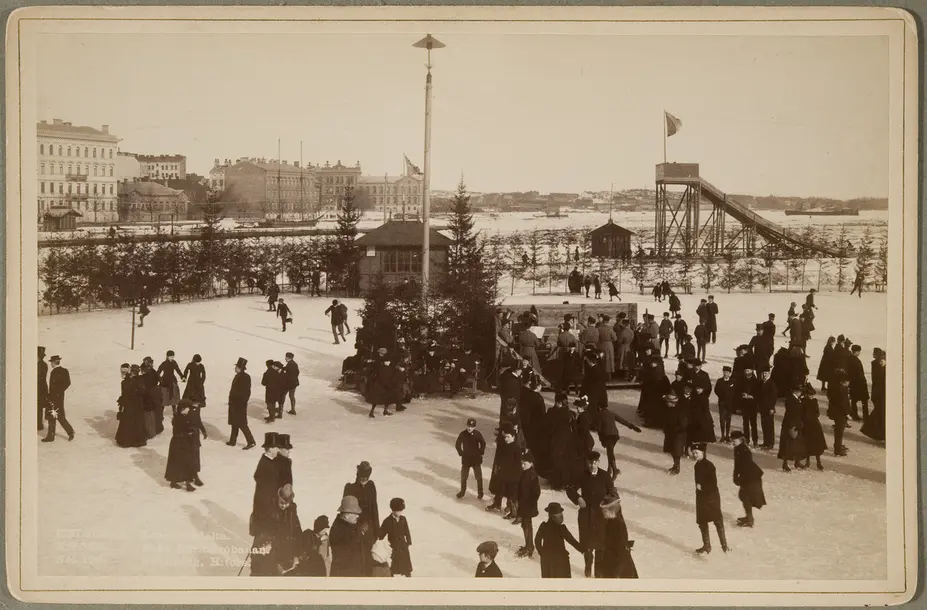
Popular destinations
The Ståhlberg children knew Helsinki intimately and roamed freely through the city. They usually returned home only when driven by hunger. The adventures of the day were lively discussed at the dinner table. Dad the photographer often received ideas for pictures from his children, who went everywhere and heard and saw all exciting things happening in the city.
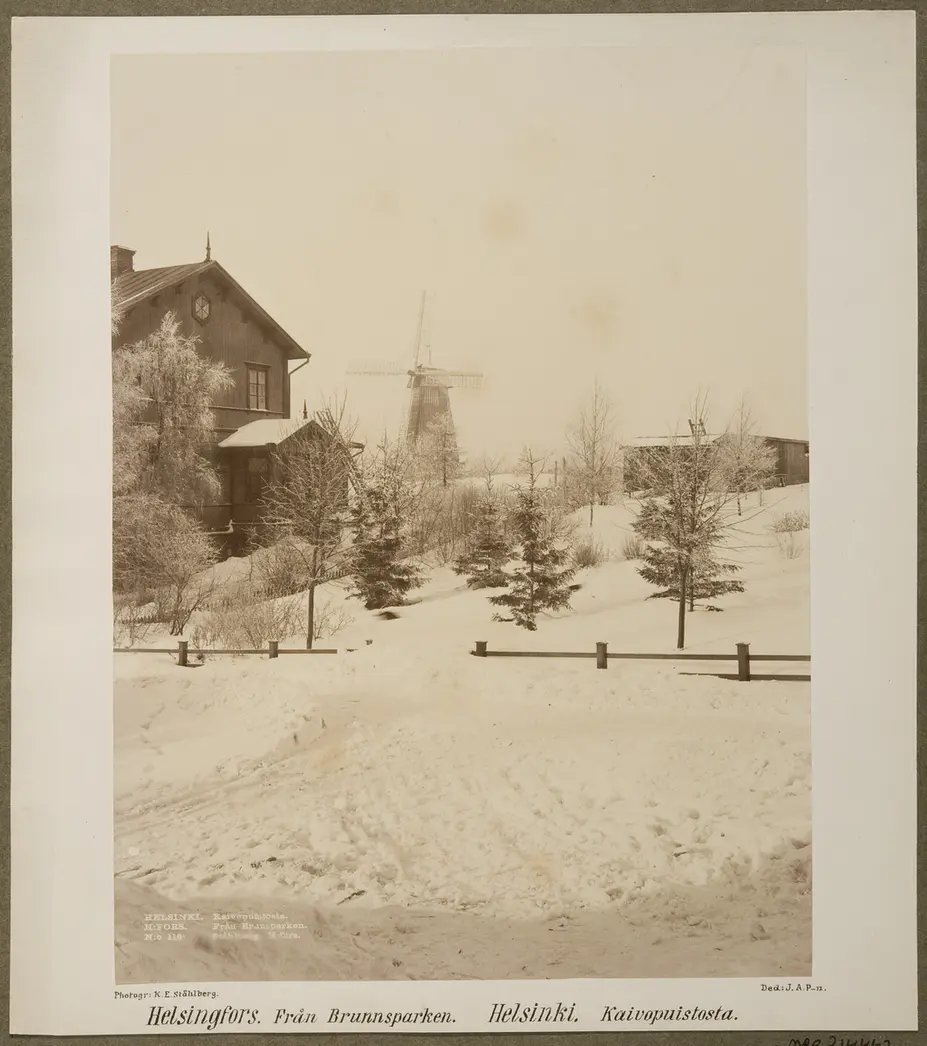
Helsinki residents took walks in Kaisaniemi, the Winter Garden, Kaivopuisto and on Tähtitorninmäki, where among others song festivals were arranged. Eläintarha was another destination where residents could enjoy nature and admire beautiful villas and the view toward Töölö Bay.
In parks and around many attractions there were restaurants serving meals, coffee and cakes, and they often offered entertainment, too. The camera lens shows a pleasant and lively Helsinki, in summer with many lush green areas, which in winter were transformed into the white magical realm of the Snow Queen.
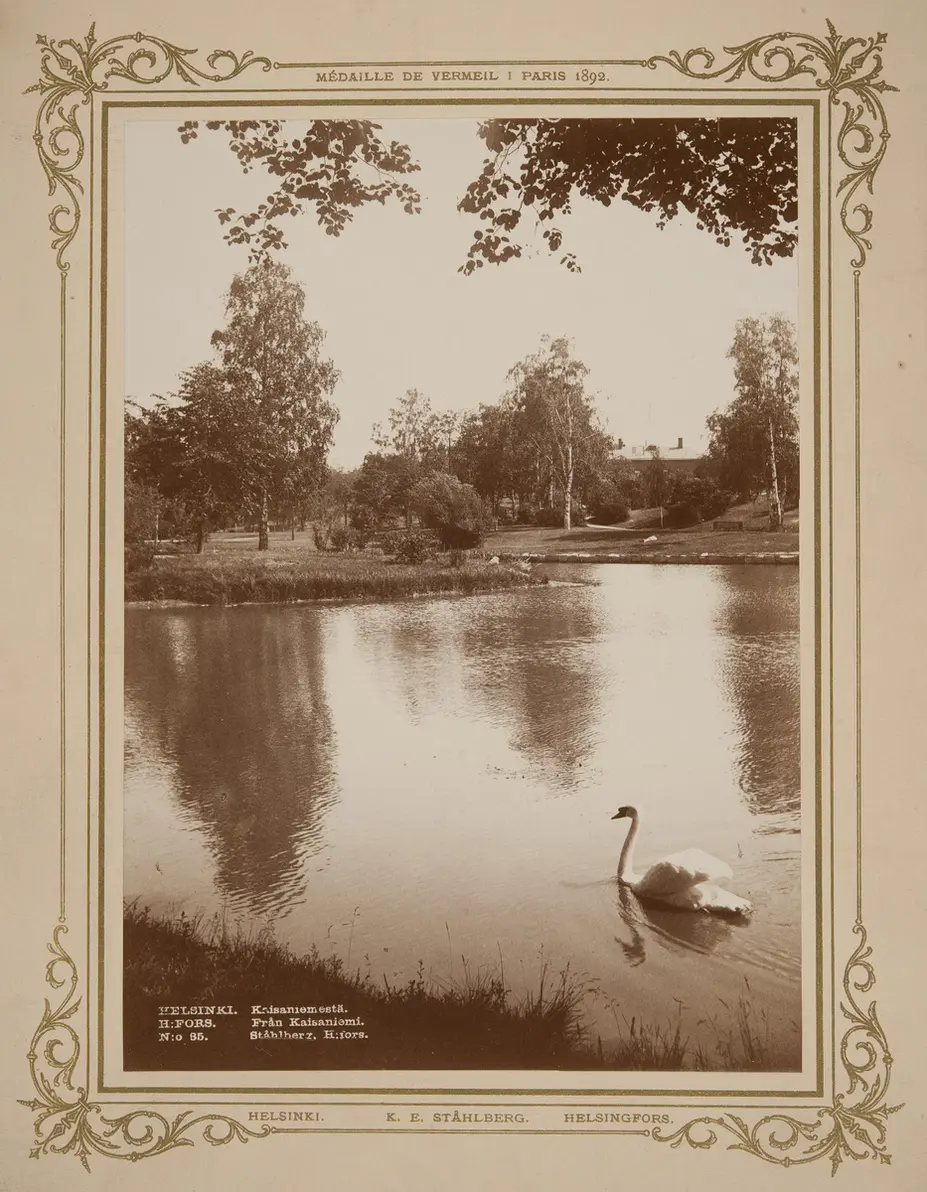
Excursions outside the city
If Helsinki residents wanted to make longer excursions, they could travel to nearby areas like Meilahti, Laajasalo, Seurasaari or Korkeasaari. Korkeasaari Zoo was inaugurated in 1889 and naturally became a favourite for family visits.
Ståhlberg photographed among others the view from the island, and a series with pavilions, the goat statue and the duck pond. Popular animals like the polar bear and a dramatic picture with three bears are among the photographs. The first stone Bear Castle was opened in the 1890s, but the modern large Bear Castle was built only in 1952.
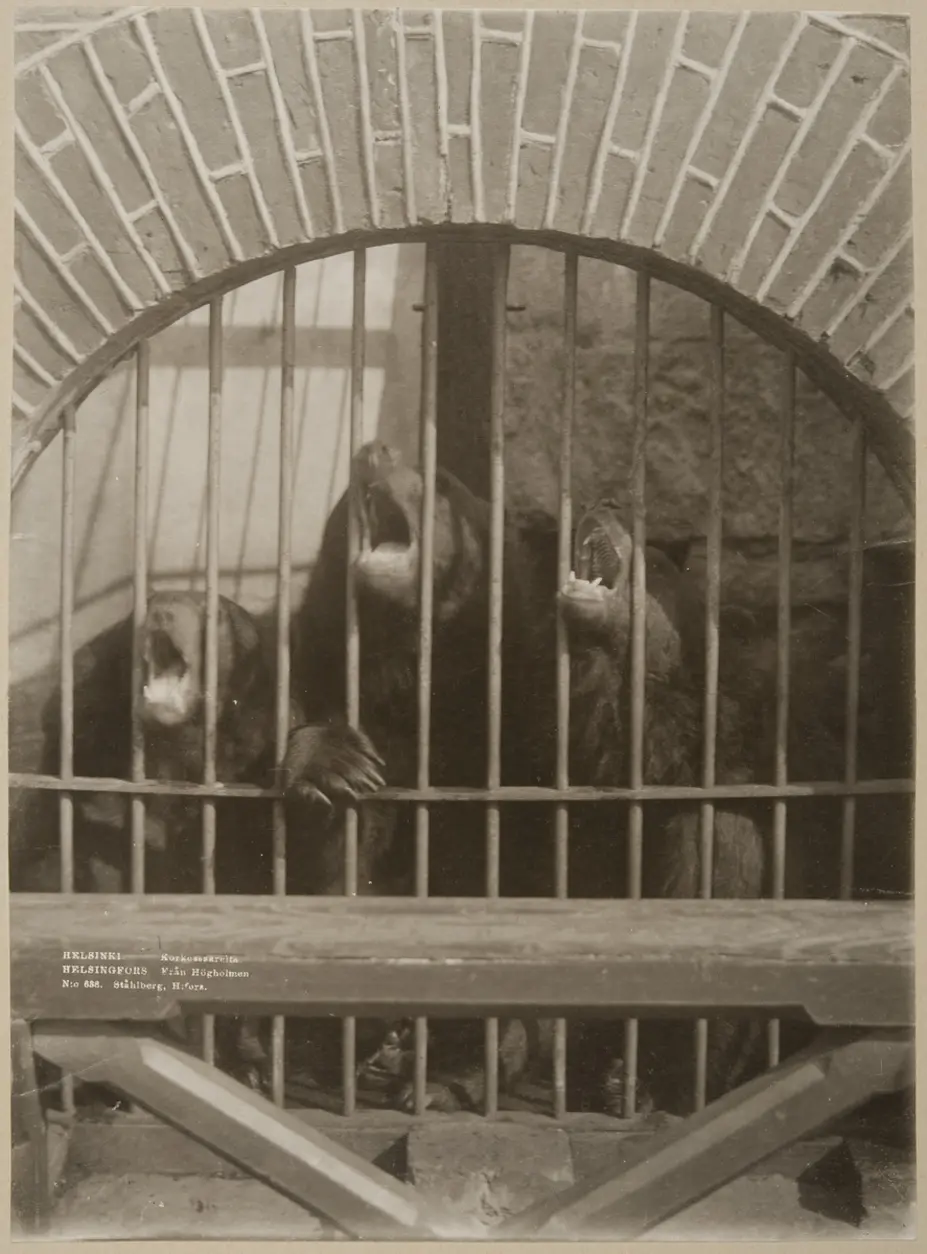
Beyond Pitkäsilta
While other photographers were content to take pictures of impressive buildings in the city centre and nicely dressed people in their studios, Ståhlberg looked for quarters with less prestige, such as Hakaniemi and Sörnäinen. Beyond Pitkäsilta the area consisted mainly of wooden houses and vast landscapes.
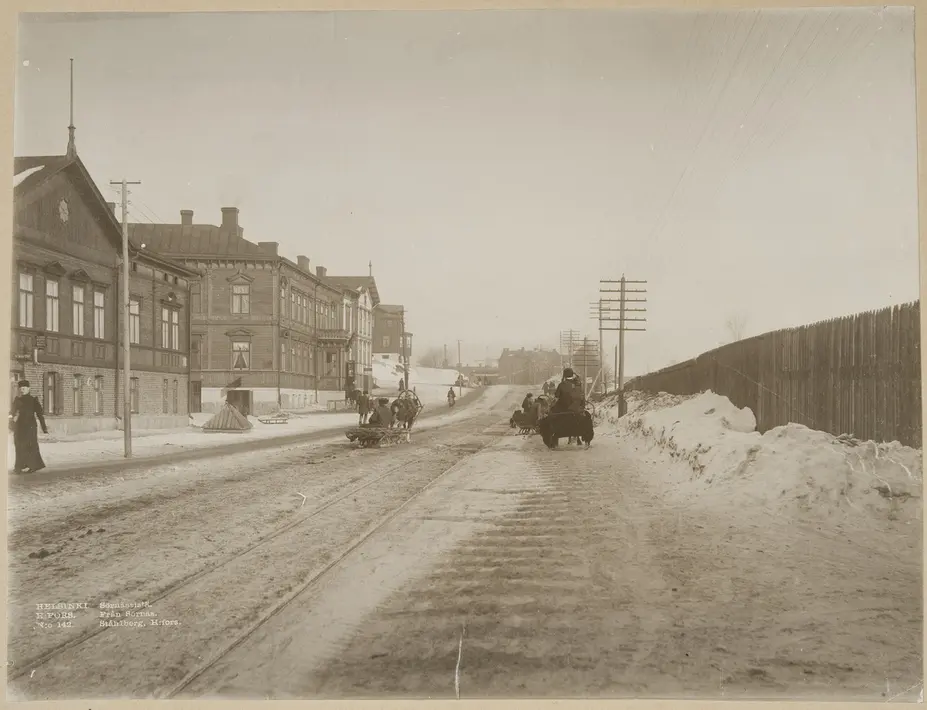
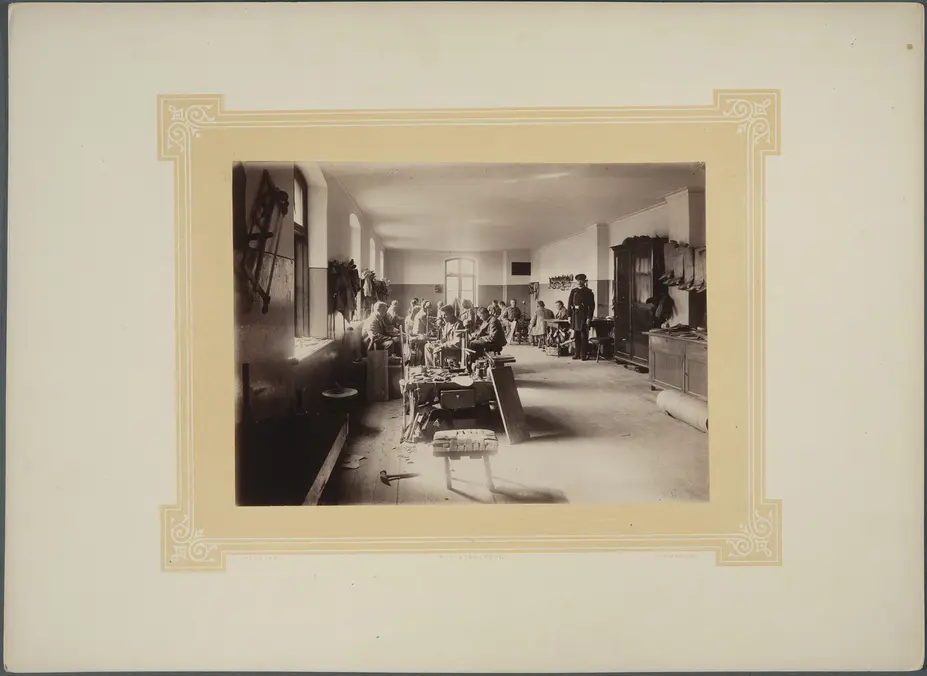
Why a well-educated and fine gentleman like K. E. Ståhlberg thought it valuable to photograph those poor quarters few could understand. The Central Prison was located in Sörnäinen, too. Ståhlberg, whose cousins were the famous lawyer and politician (later the first President of Finland) K. J. Ståhlberg (1865–1952) and the Bank of Finland director Karl (Kaarlo) Basilier (1860–1951), should know better!
The prisoners worked in workshops as carpenters or shoemakers, among others. The photos were probably taken to show the modern prison. The prisoners were treated well, carefully watched, and they worked diligently, so they did not threaten the surrounding society.
Industries
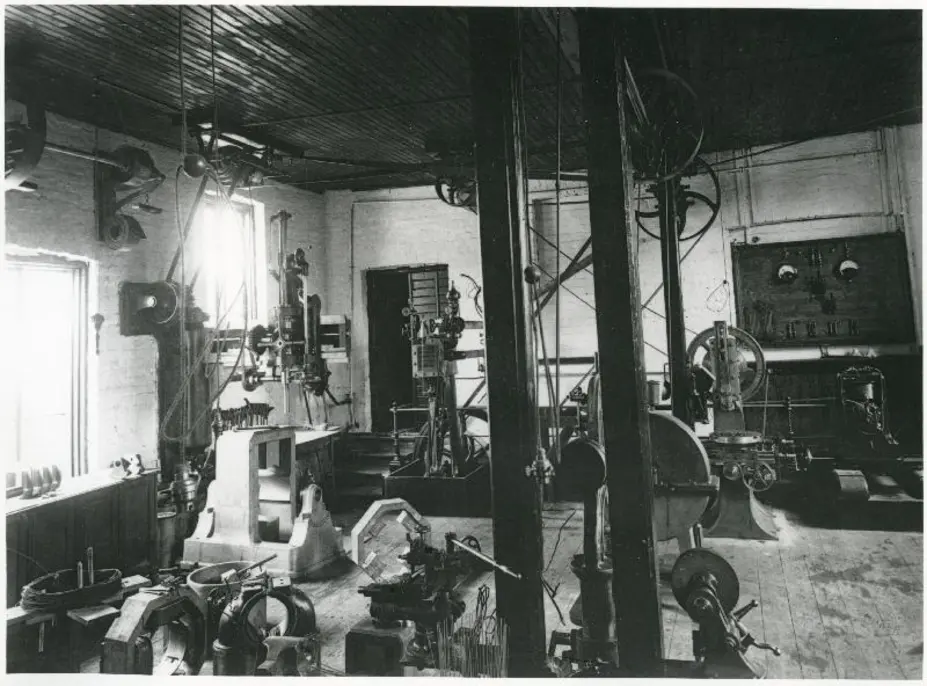
Finland became urbanised and industrialised at the end of the nineteenth century. A special category in Ståhlberg’s collections contains pictures from industries in Helsinki and Tampere. Among them is the first dynamo factory (established 1891) at Eerikinkatu 14 in Helsinki, owned by Gottfrid Strömberg.
Despite its name, this workshop consisted at first of a small room where only four persons worked with building and repairing electrical engines and generators. Strömberg’s firm grew at the beginning of the 1900s into one of the leading industrial companies in Finland.
Films
The honeymoon trip with Sonja to Paris at the end of 1896 inspired Ståhlberg to buy a film projector. The Lumière brothers had presented their new projector during the previous year in France. From 1897 Ståhlberg travelled through Finland showing foreign films.
In 1904, K. E. Ståhlberg opened the first stationary cinema in Finland at Mikonkatu 5. The “live pictures” gathered huge audiences. Sonja and Ståhlberg’s daughters played the piano during shows, because the films were still silent films. Thousands of people watched films in the cinema Wärlden Rundt – Maailman Ympäri (‘Around the World’), but people also continued to visit the photo studio for portraits, postcards and pictures.
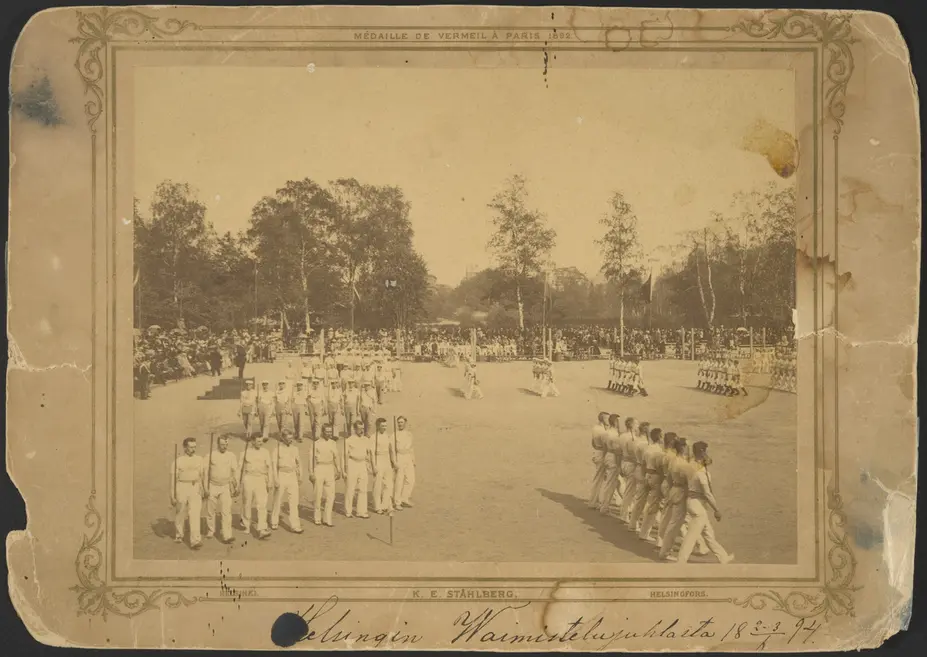
Ståhlberg and his photographers now also filmed news and events themselves. Song and gymnastics festivals and sports events were especially popular, but they required highly skilled photographers and excellent cameras. The first films were documentaries and lasted only a few minutes. In 1907 K. E. Ståhlberg produced the first Finnish feature film, Lönnbrännarna / Salaviinanpolttajat (‘The Moonshiners’).
Lots of people moving at the same time could easily create blurred photographs. Quick movements and moving elements like rapid waters were complicated to catch on photographs, but on film the movements appeared much more alive and real.
Atelier Apollo
Ståhlberg became increasingly interested in film, theatre and operetta. The numbers of professional and amateur photographers had in his view already become far too large. Several copied his style, motives and techniques, and visited the same places Ståhlberg and his employees had photographed earlier.
With the financial support of Sonja, Ståhlberg expanded his activities and established Atelier Apollo in 1899. After this, Atelier K. E. Ståhlberg concentrated on cheaper portrait photography, while Atelier Apollo produced pictures of higher quality and also films.
In 1910, Ståhlberg opened Cinema, Theatre, Hotel & Restaurant Apollo on Eteläesplanadi 10. On the Apollo stage, Ståhlberg’s daughters and their teacher posed during dance lessons, while dad the photographer tested cameras, lighting and other technical details.
Sonja supervised the activities and took care of all practicalities in the Apollo House, because Ståhlberg was often abroad engaging new artists. The Apollo Theatre became a serious competitor to the established theatres in Helsinki, such as Svenska teatern (Swedish theatre), Aleksanterin teatteri and the Finnish National Theatre.
The first tango in Finland was presented on the Apollo stage in 1913, and the new tango fashion was directly copied by other theatres. The Apollo Theatre focused mostly on light entertainment like operettas, revues, matinees and concerts.
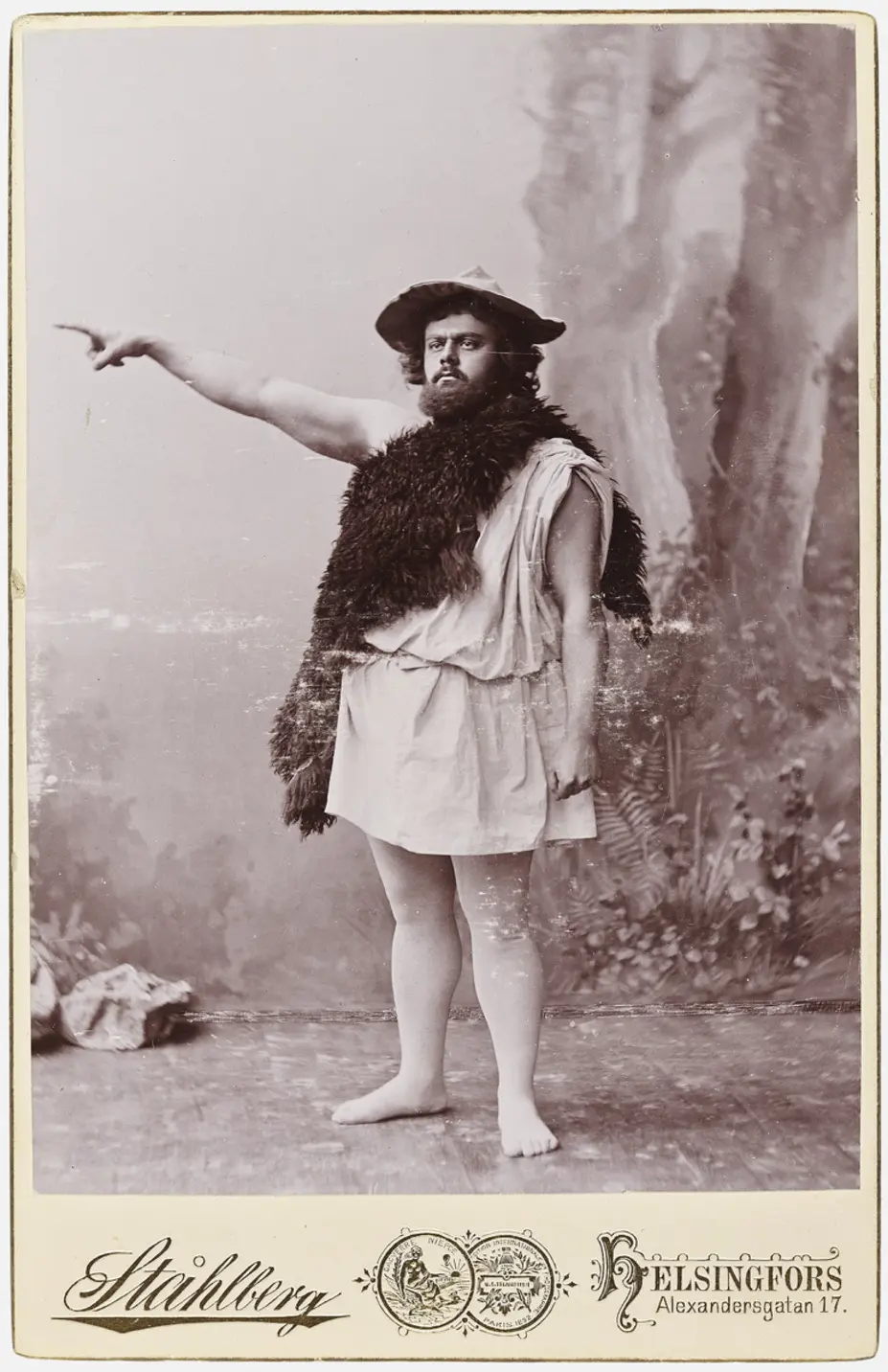
Most performances were in Swedish and foreign languages, because the artists came mainly from the Nordic countries or continental Europe. Ståhlberg photographed actors in various roles on his own stage and also in other theatres, and the spectators collected portraits of famous actors and singers.
Wide open spaces
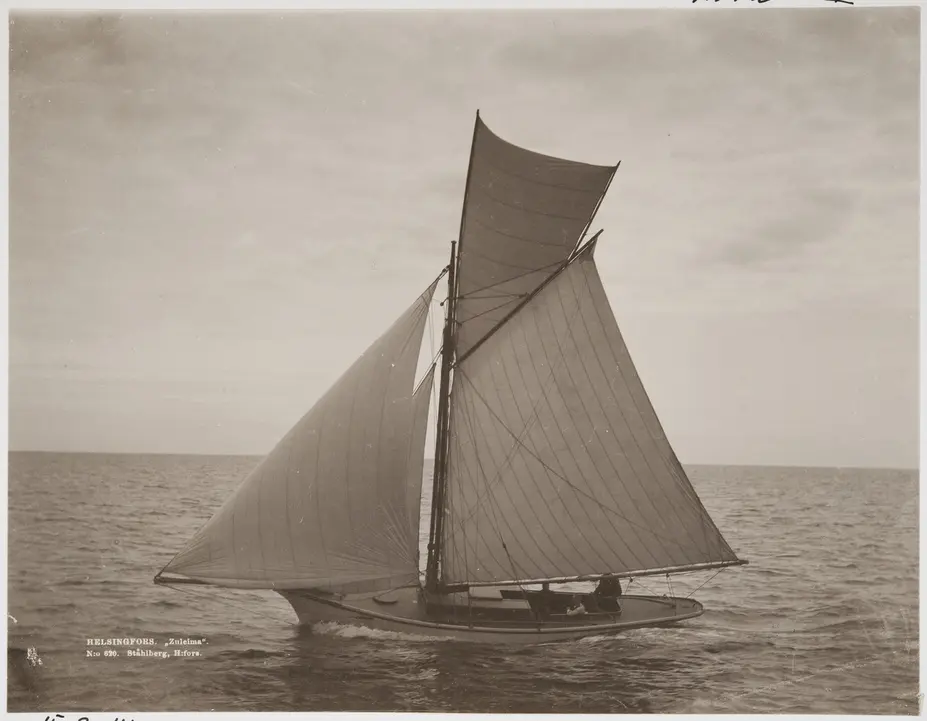
The sea and its open vistas were especially important for K. E. Ståhlberg. He was an enthusiastic sailor and a member of the yacht club Nyländska Jaktklubben (established 1861). When he needed a holiday, he went sailing. During the journey he tried out new cameras and photographing and filming techniques, in order to be able to document sailing competitions, landscapes and vessels both in the archipelago and the open sea.
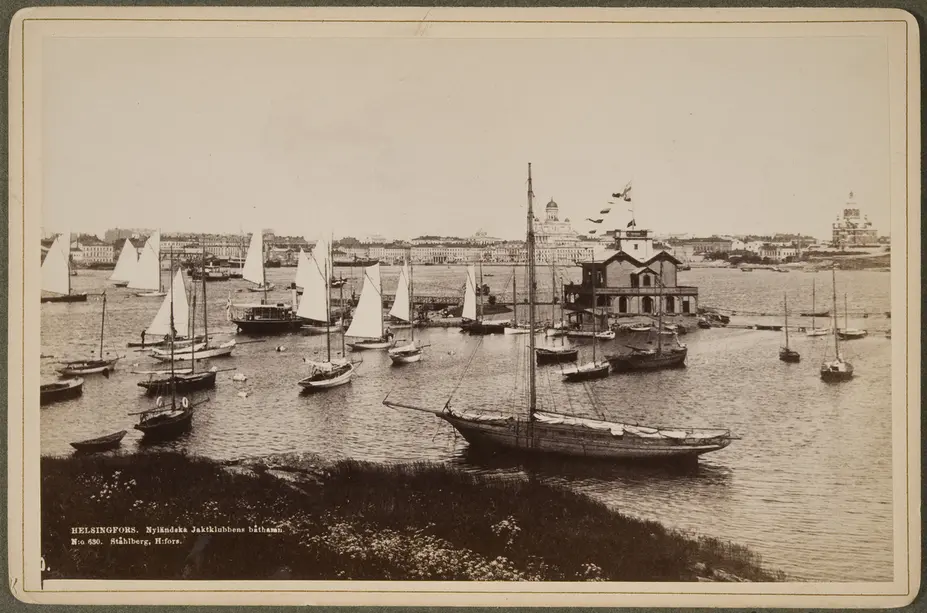
Competitions, sailing trips, his own and other people’s boats, and views from the archipelago were pictured and also filmed. Ståhlberg undertook long sailing trips along the coast every summer with his photographers, family or friends, and occasionally he was asked to take pictures during clients’ boating trips.
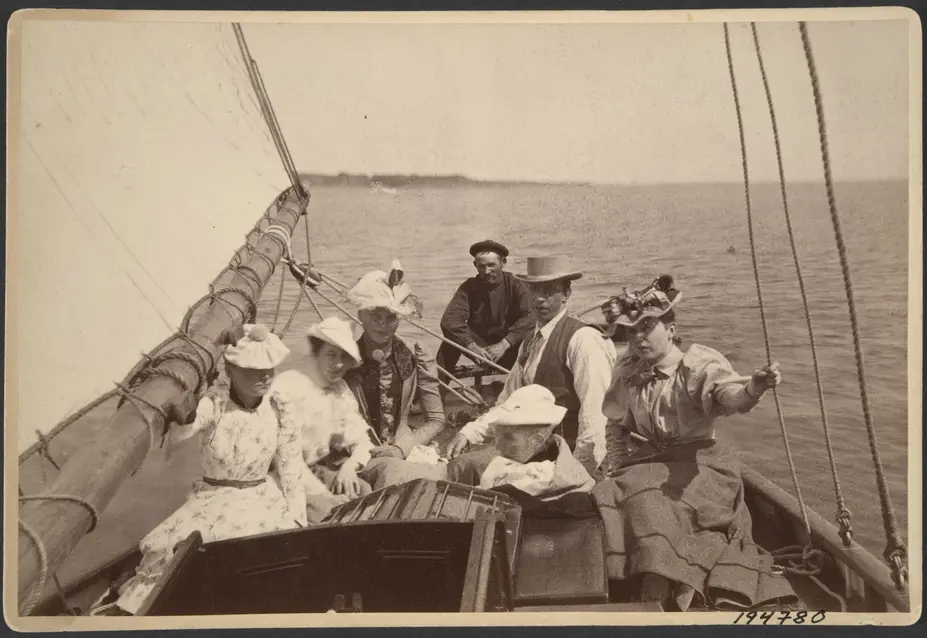
Today hundreds of photographs by K. E. Ståhlberg and his photographers exist in archives in Finland and abroad. Many pictures have been digitalised. The open vistas and perspectives, often seen in Ståhlberg’s photos, reflected his need for space to develop new techniques and projects nobody else had done before. Wide open spaces and full freedom were the foundations for a pioneer like K. E. Ståhlberg and his life and work.
Literature
Hirn, Sven 2001. Apolloteatteri. Yliopistopaino.
Hirn, Sven 1977. Ateljeesta luontoon: valokuvaus ja valokuvaajat Suomessa 1871–1900. Suomen valokuvataiteen museon säätiö.
Ståhlberg, Sabira 2013. K. E. Ståhlberg: Fotograf, filmskapare och entreprenör. Svenska litteratursällskapet i Finland.

