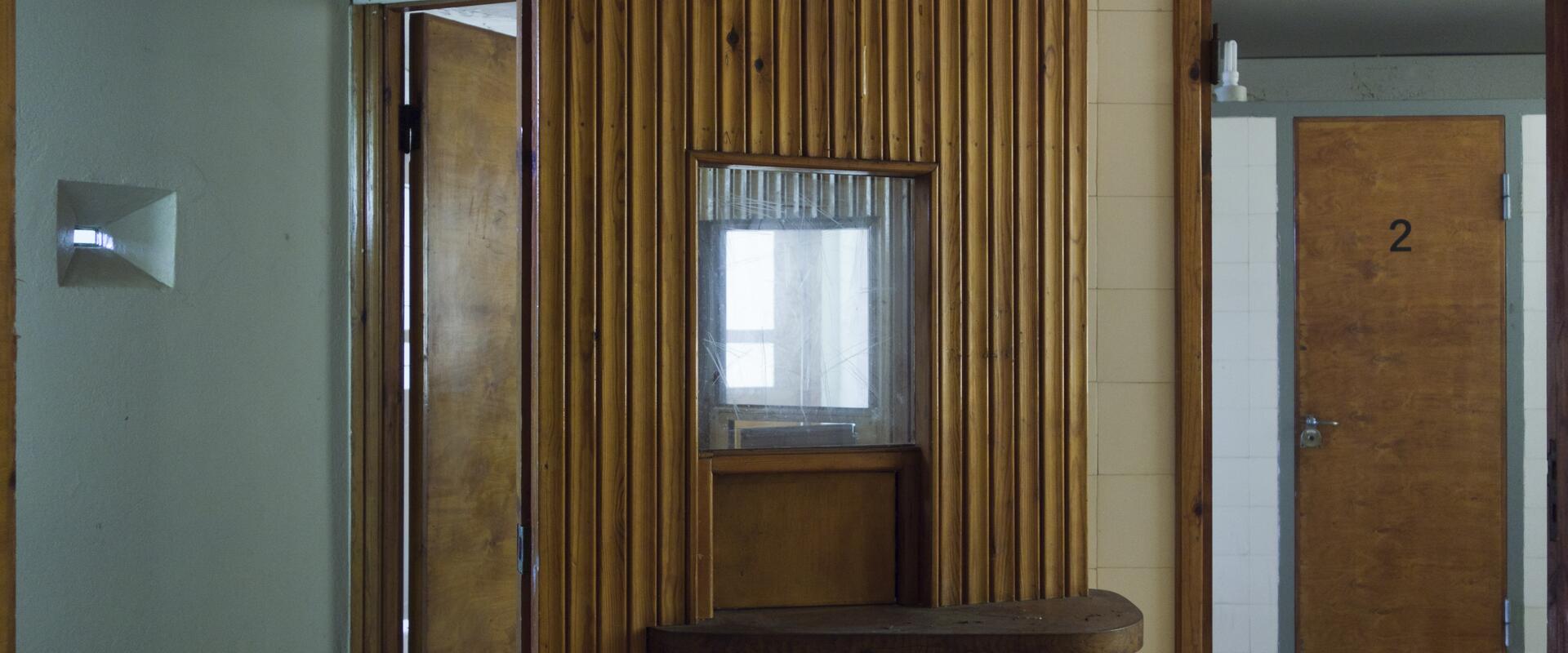
The places where gay men in Helsinki sought to meet others varied according to their status and wealth. The capital city is known to have had a few restaurants frequented by gay men in the first half of the century. They would seek company and socialise in restaurants without attracting the attention of other customers, and male couples saw it best to save dancing together for private afterparties. Many forms of debauchery and love were enjoyed in private homes and salons behind closed doors. However, not everyone was connected to such circles or could afford to spend evenings in the fancy restaurants of the city centre. For many gay men, the city’s parks and toilets were more natural or the only possible places to find someone. This phenomenon had international roots. In major European cities such as London and Paris, public toilets had become places for sex between men in the second half of the 19th century at the latest.
Paradoxically, it was the public urban space that provided a setting for these secretive and, at the time, criminal activities. Men would seek company hiding in plain sight, in central locations across the city open to all, during evenings and at night. People not in the know did not necessarily pay too much attention to all the men wandering around outside after dark. Gay men would have sex in public toilets and bushes, out of sight. On the other hand, the parks were not just a place for casual sex, but also a place for finding friendship and companionship.
Sexual acts between women would mainly take place at home instead of public urban spaces. Women were not acknowledged as having an independent sex life like men, which meant that desire between women was often excluded from any control measures. For example, two unmarried women living together was seen as a practical solution, not raising many eyebrows.
Tähtitorninmäki
Back at the turn of the 20th century, Tähtitorninmäki is known to have already served as a meeting place for men who wanted to have sex with other men. The park is mentioned in the groundbreaking 1914 book Die Homosexualität des Mannes und des Weibes by German sexologist Magnus Hirschfeld. For his book, Hirschfeld collected information on homosexuality from around the world. Information about Finland was provided by Fritz Wetterhoff, who had made a career as a civil servant in Hämeenlinna and fled to Berlin to escape his tangled finances. According to him, the activities on Tähtitorninmäki in Helsinki had been “colourful and unabashed” until at least 1905. Back then, during the first period of repression, Finland’s own military was disbanded, which also temporarily shut down nighttime socialising in the park behind the barracks.
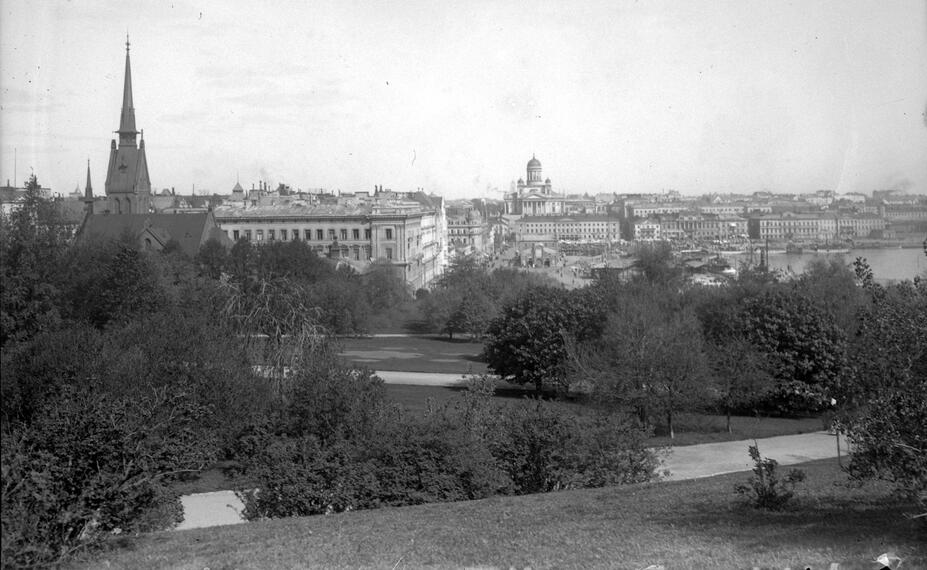
The meeting culture between men on Tähtitorninmäki was revived, and the park’s surroundings with its urinals maintained their status as a popular meeting place for homosexuals until the mid-century. Touko Laaksonen, also known as Tom of Finland, even immortalised the park’s urinal in a watercolour work, which is now kept in the art collections of the National Gallery. In the picture, a young man dressed in a flat hat, a leather jacket and tight trousers is standing inside the tin urinal. The City decided to demolish the same urinal in 1958 after the principal of a nearby school complained about vagrants loitering near the school premises.
The reputation of Tähtitorninmäki carried all the way to one of Mika Waltari’s Inspector Palmu detective novels. The park’s gay culture is mentioned in passing in the 1962 story The Stars Will Tell, Inspector Palmu. When a body is found in the bushes of Tähtitorninmäki, Inspector Palmu initially suspects that the case involves a gay man who has been blackmailed.
Esplanadi
In the first decades of the century, only occasional convictions were imposed for same-sex fornication. The situation slowly began to change in the 1930s. Homosexuality as a word and a phenomenon spread into the public consciousness. At the same time, it came to be seen as a problem – particularly as a blight on urban life.
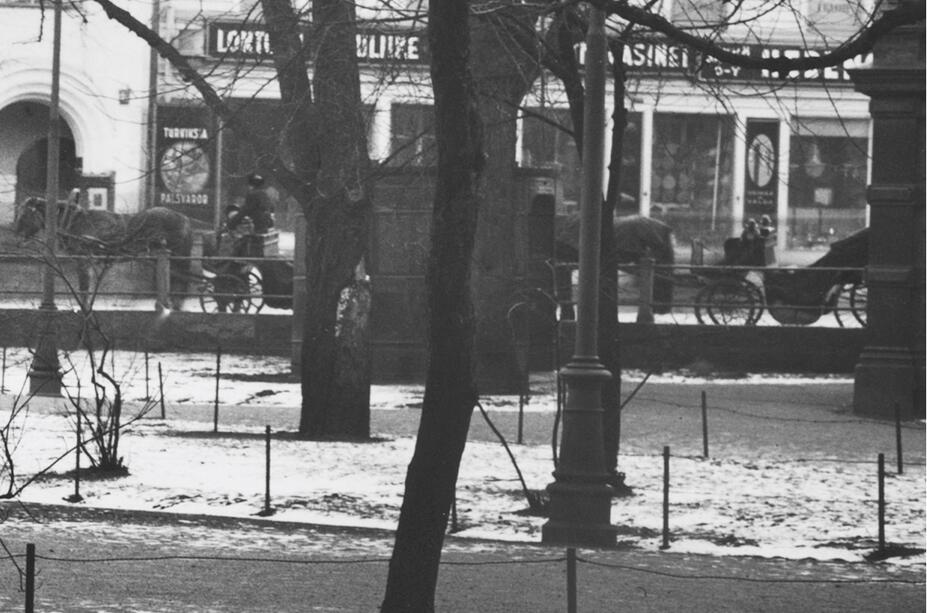
Considering the prevalent attitudes of the time, it was no wonder that one alert citizen took it upon themself to report the meeting places of gay people in the capital to the police. A letter of denunciation sent in 1935 mentions Central Railway Station Square and Esplanadi as such places. On Esplanadi, men would gather on benches at a certain point along the boulevard:
“The benches near the corner of Espa and Mikonkatu are also spots where it is very easy to come across some old man or director offering a cigarette and asking you out for a drink – especially if you are a soldier. Someone should be put out there as bait – and then.”
The benches on Esplanadi were also quite popular among other residents, and gay people were not the only loiterers to have incurred disapproval over the park’s history. At the beginning of the century, the disruptive activities of vagrants, young workmen and soldiers in the Esplanadi area had been the subject of many criticisms in the columns of Helsinki newspapers. There were several restaurants along the boulevard, and the area was also known for street prostitution.
In addition to the park benches, gay men would meet each other in the urinal behind the Swedish Theatre. The first urinal in the theatre section of Esplanadi was built in the late 1870s, but it was later upgraded with a more modern model, probably several times. Among gay men, the circular urinal in the theatre section of Esplanadi was known as the Head Office. When the urinal was removed from the park in 1944, the demolition was justified not only on the grounds of an objectionable odour emanating from the facility, but also on the grounds that drunkenness and other behaviours considered to be unsavoury were taking place under its shelter. So integral was the urinal to the capital city’s early gay culture that flowers are said to have been brought to the site of the demolished facility as part of a playful memorial ceremony.
Central Railway Station Square
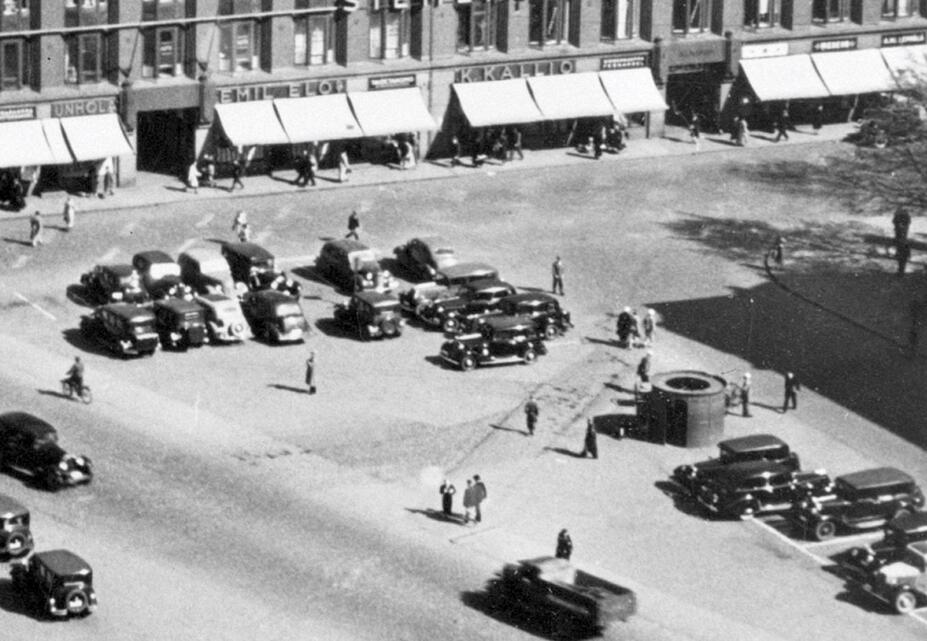
The busy station region offered excellent opportunities for seeking out casual company. Accordingly, the other place mentioned in the denunciation letter was Central Railway Station Square with its urinals:
“The ‘Fish Trap’ urinal at Central Railway Station Square is one of those places where there are always those guys staring at others’ privates in a manner that might make an ordinary ‘shy’ citizen panic and relieve himself on someone else!”
Even without being tipped off by citizens, the police were aware of homosexual activities at Central Railway Station Square. The urinal at the corner of the square was one of four toilets that the Helsinki Police Department proposed to the City Board to be lit in 1934. The lighting was intended to make it easier for the authorities to keep an eye on the public toilets, which, according to the police, “are used for homosexual and onanistic fornication and other debauchery, as well as drinking, during evenings and after dark, thus making the toilets dangerous to their users.”
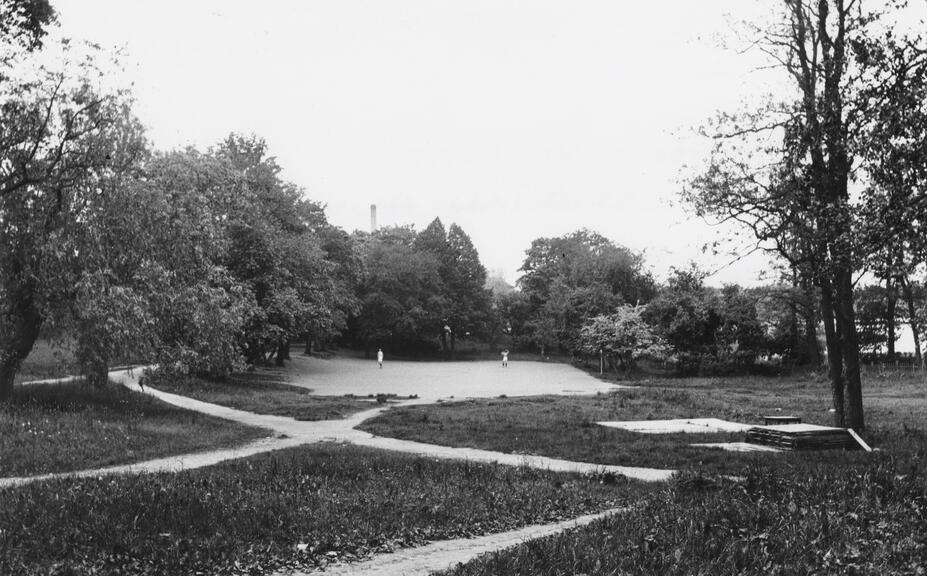
Hesperia Park
Hesperia Park was one of the most important meeting places for gay men in post-war Helsinki. Located near the railway station, the park was easily to reach from all parts of the city. The park’s popularity among gay men had also been noted by the police. The Töölö guard unit had started to monitor Hesperia Park in the spring of 1950, and the park was later also supervised by the vice squad.
The authorities’ attention was drawn in particular to the public toilets in the park, where men were having sex in secret. Police memos from that time contain detailed descriptions of the acts taking place in the park toilets. According to the police force, the majority of suspicious incidents in the city’s public toilets had occurred in Hesperia Park. Because the toilets provided a setting for fornication offences, the police demanded that the City demolish the facilities. Of the three toilets in the park, one was demolished in the spring of 1951 and the other two in 1958.
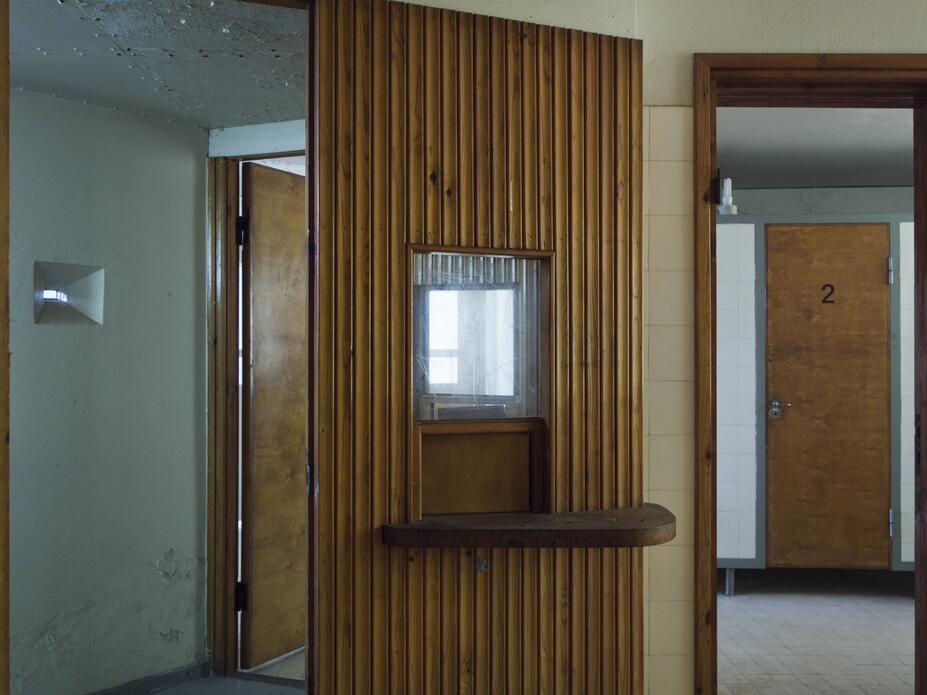
The supervision of Hesperia Park was part of the City’s tightened control of the urban space. The streets of the capital city were cleared of various groups of people labelled as antisocial, especially before the 1952 Summer Olympics. In addition to gay people, homeless alcoholics were also a source of outrage in parks and public toilets. Due to the issues found in public toilets, the intention was that the new toilets built in the city for the Olympic Games would be supervised. To prevent misbehaviour, a line of sight was provided from the toilet attendant’s facilities to all of the customer facilities.
Carousel area
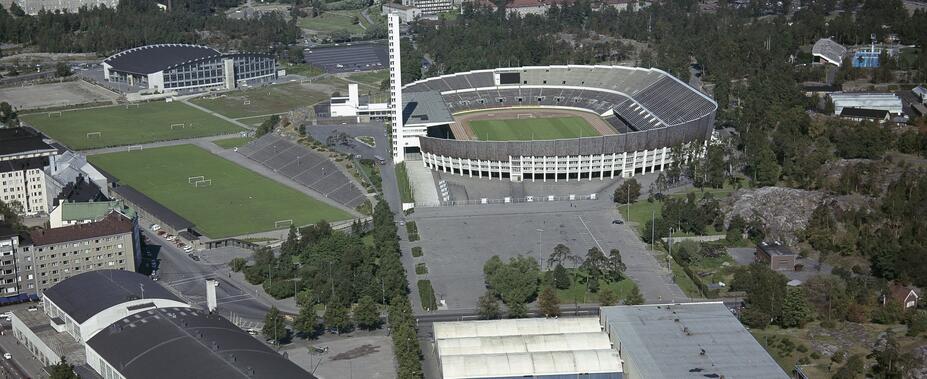
With the demolition of the toilets, homosexual meeting places moved to other areas, some further away from the city centre. One such area was the front of the Olympic Stadium, stretching from the Stadioninpuistikko park to the bushes of Mäntymäki. Mäntymäki had been known to the police as a meeting place for gay people since the early 1950s. At the time, an old dry toilet had been demolished in the area.
Later, in the late 1960s when Valdemar Melanko’s field research focused on at gay culture in the capital city, the significance of the stadium area as a meeting place for gay men was evident. Melanko observed people walking back and forth around the stadium area looking for company. Apparently because of this, the location was known as the Carousel area among gay men. Although there was a police station in the adjacent exhibition hall, the police no longer paid much attention to the activities of gay men.
The focal point of the area was a urinal in Stadioninpuistikko, known as Jenny’s Tearoom. The unusual name came from American slang, where the word ‘tearoom’ referred to a public toilet. The police proposed the dismantling of the urinal in 1971, not because of sex between men, but because the facility was known to be a place for the consumption of strong alcohol. The City Board decided to allow the facility to remain in place.
Sources
Archive sources
Abnormit sukupuolielostelijat (‘Abnormal Sexual Debauchers’). Archive I of the State Police. National Archives.
Helsinki City Archives (Hka)
Minutes of the City Board 25 October 1934, Section 1,745 with appendices. Hka.
Minutes of the City Board 27 January 1944, Section 167 with appendices. Hka.
Minutes of the City Board 15 March 1951, Section 784 with appendices. Hka.
Minutes of the City Board 21 August 1958, Section 2,238 with appendices. Hka.
Minutes of the City Board 20 November 1958, Section 3,076 with appendices. Hka.
Literature
Hagman, S. 2014. Seven queer brothers: Narratives of forbidden male same-sex desires from modernizing Finland 1894–1971. Florence. European University Institute.
Melanko, V. 2012. Puistohomot. Raportti Helsingin 1960-luvun homokulttuurista. Helsinki. Finnish Literature Society.
Mustola, K. 2004. Heteronormin horjuttajat. In Mäenpää, Saarikangas & Sarantola-Weiss (ed.). Koti, kylä, kaupunki. Suomen kulttuurihistoria 4. Helsinki. Tammi.
Säätyläispojan nuoruus Helsingissä 1940–1950. SETA 4/1988, 18–21.
Turunen, V. 1988. Helsingin 30-luku: punkkerit, uimakopit ja Tallinna. SETA 3/1988, 28–31.
Turunen, V. 1988. Helsingin ihmeellinen 1940-luku. SETA 2/1988, 10–15.