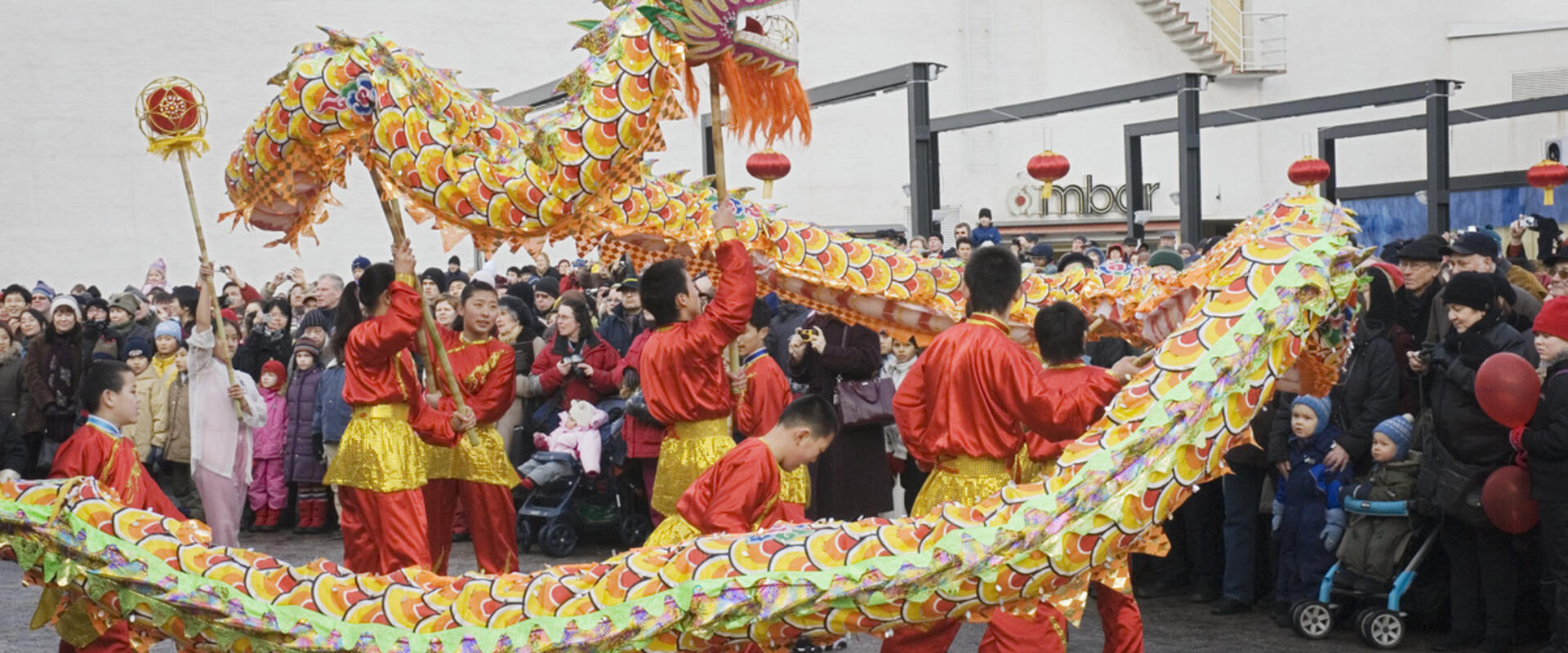
International migration before Finland’s independence
For a long time, Helsinki was a small town with fewer than 2,000 people even at most. Growth only began to increase with the construction of the Viapori fortress in the mid-18th century when Finland was still part of Sweden. This growth was further strengthened when Helsinki became the capital of the autonomous Grand Duchy of Finland of the Russian Empire in 1812.
However, as a seashore city, Helsinki has never been completely isolated from international migration. Foreign traders would visit the city, some of them staying for longer periods. The port was visited by foreign sailing ships for both peaceful and military purposes. The construction of Viapori, which began in 1748, brought a large number of people to the city from all over the Swedish kingdom of the time. See our article Large building site of Viapori and its builders.
The economy of Finland was liberated and its administration developed greatly in the late 19th century, bringing about another growth spurt. The opportunities available attracted a wide range of entrepreneurs to the city, not only from within Finland, but also from other parts of the Empire and beyond. The city’s – and the whole country’s – business sector, as well as science and arts activities, have immigrants to thank for many things.
The number of Russian people in Helsinki understandably increased during the period of autonomy. With the construction of Viapori, later known as the garrison of Suomenlinna, the city received not only soldiers but also traders linked to the garrison. Some of them were later allowed to set up a general trade establishment. In addition to traders, the city was also home to civil servants, as well as priests and teachers. A popular holiday destination for people from St Petersburg, Helsinki also received Russian tourists coming to spend their holidays, which also gave rise to entrepreneurship in the tourism sector.
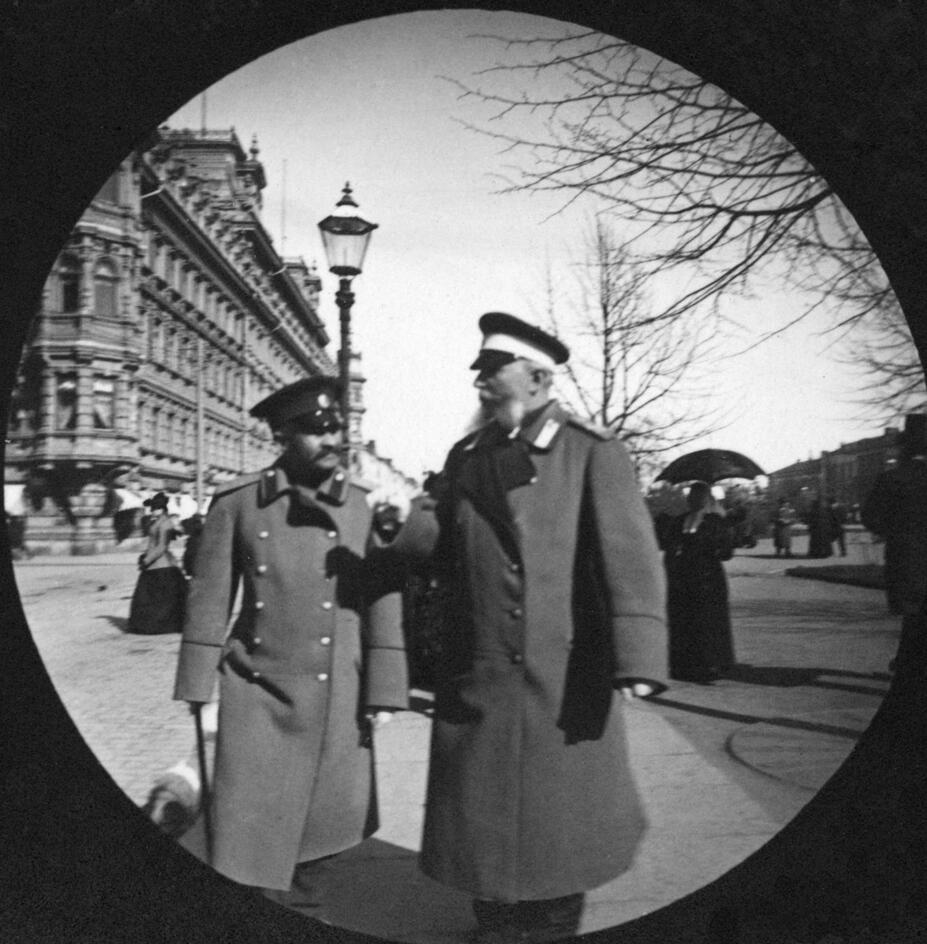
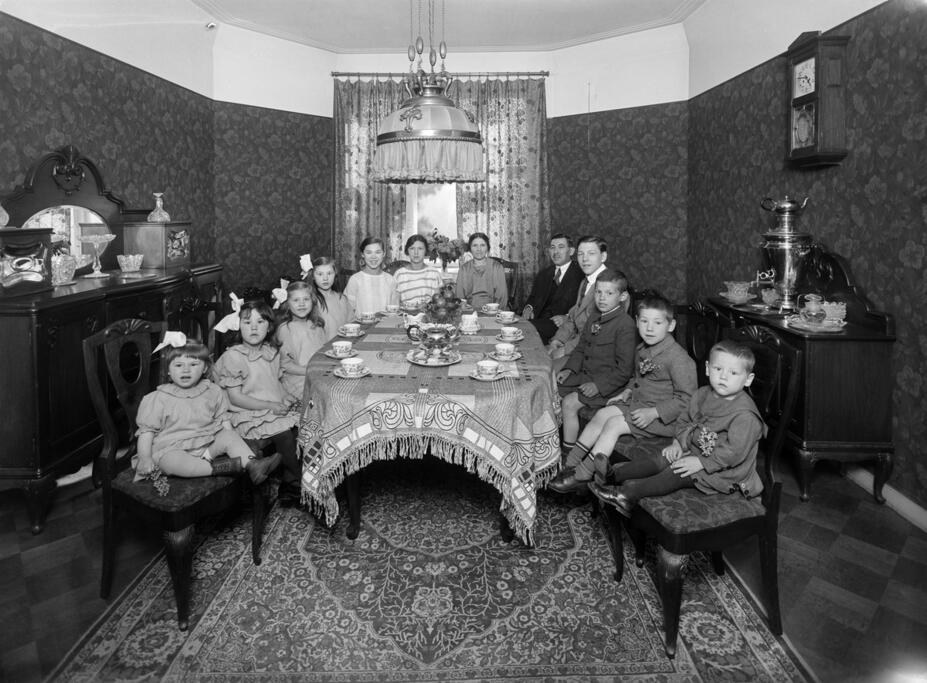
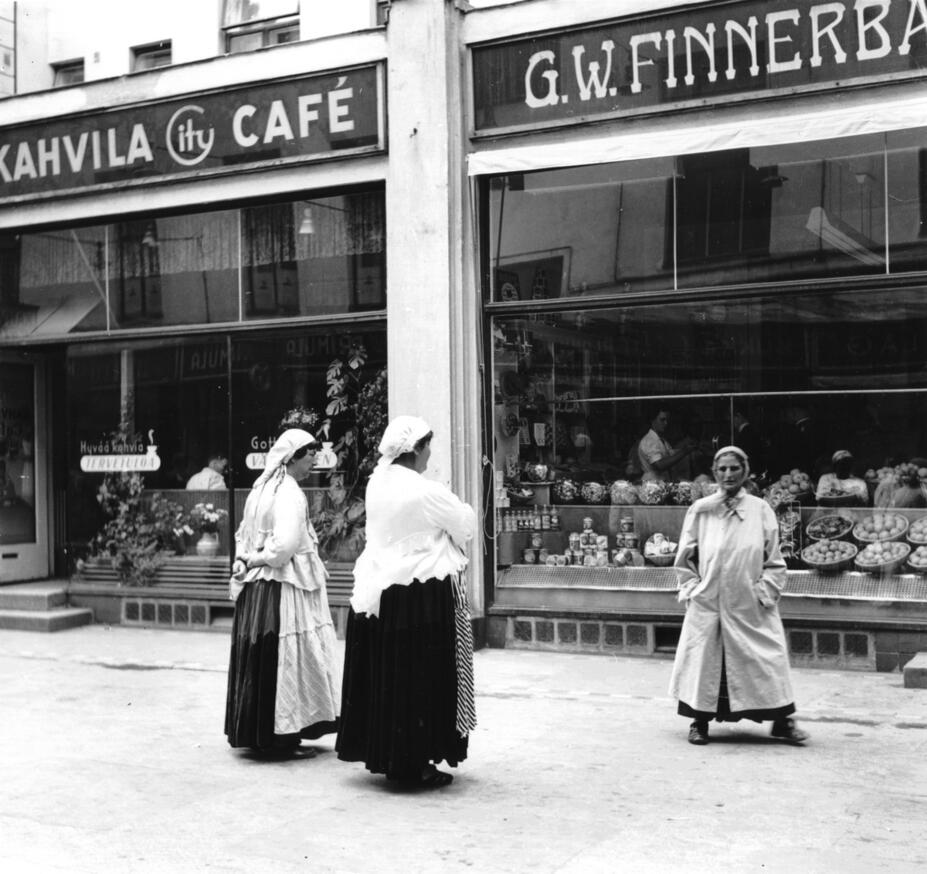
The 19th century saw the emergence of two of Finland’s traditional minority groups, the Tatars and the Jews, many of whom settled in the capital city. Tatar soldiers and military imams arrived at the beginning of the period of autonomy, but a more permanent Tatar population only began to emerge after 1870, when the railway between Helsinki and St Petersburg was opened. The train also brought Tatar merchants, some of whom stayed permanently in Helsinki and started families there.
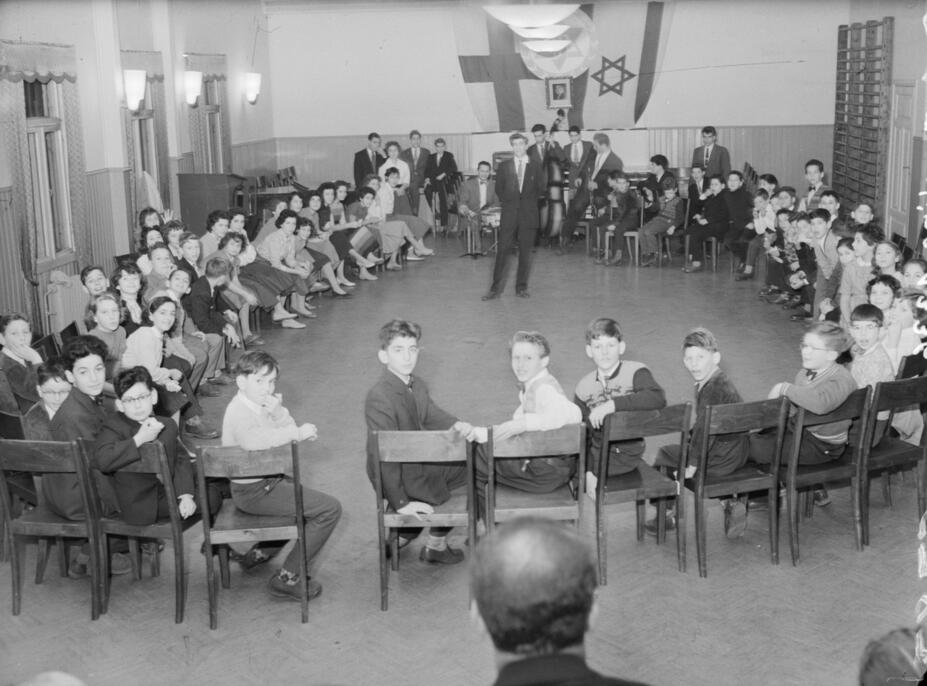
The law under Swedish rule, still in force in the Grand Duchy, prevented Jewish people from settling in Finland, making it more difficult for Jews to establish a community in the country. However, many Jews also came to Finland as soldiers and were, after a legislative reform in the mid-19th century, allowed to stay in the towns where they had served. Many of them had already been living in Helsinki for years at this point. As was the case with the Tatars, this led both to the organisation of religious practices and to the emergence of other associations among the Jewish community.
Freedom of trade was introduced in Finland in 1879. In the case of the Tatars and the Jews, however, it was restricted by a decree that allowed former soldiers and their families to sell only small goods of their own making, tobacco and second-hand clothes. The market square in front of the Kamppi centre still bears the name Narinkka (na rynke, ‘on the market square’), which originates from the Russian language and the Jewish clothing trade. Freedom of religion was fully realised in Finland soon after the country’s independence, and it also became possible for Jews to become Finnish citizens in 1917.
In 1870, Helsinki still had only about 30,000 residents. Over the next half century, the city grew rapidly, reaching a population of around 160,000 by 1920. People moved to Helsinki both from within Finland and from abroad, and this greatly changed the city’s population structures. This city with a clear Swedish-speaking majority became a place where more than half of the population spoke Finnish as their first language. By 1920, Swedish speakers only made up one third of the population, although their numbers had increased as well.
In 1870, nearly one fifth of the population spoke a language other than Finnish and Swedish. In reality, there were even more foreign language speakers, as many of those who had served in the military were not registered as living in the city. Russian speakers were by far the largest group, but their numbers fell sharply in the following decades. In addition to the languages of the neighbouring regions, South European languages have been spoken in Helsinki, and even small numbers of Persian, Japanese and Korean speakers have been recorded in the statistics.
Low immigration in the first 70 years of independence
Independence closed Finland’s eastern border, resulting in immigration being very low for roughly 70 years. Many people who had fled the Russian Revolution continued their journey to other countries. A large number of the Ingrians and other people who had come to Finland during the 1939–1944 wars had to be repatriated. The relocation of Karelian evacuees cannot be considered immigration, as it occurred within the borders of the state at the time. The ceded areas were also home to a large number of Finnish Roma people, and over time, the Roma population in Helsinki also began to grow.
Helsinki grew rapidly after the war, mainly as a result of migration within Finland. People would move from the countryside to towns and from towns to larger cities. Many people moved from Finland to Sweden, and in the peak years of 1969–1970, some 80,000 Finns went across the Gulf of Bothnia to find work. It has been estimated that around half of those who left eventually returned, but many also stayed in Sweden. Returning migrants would often move to Helsinki and other major cities for work.
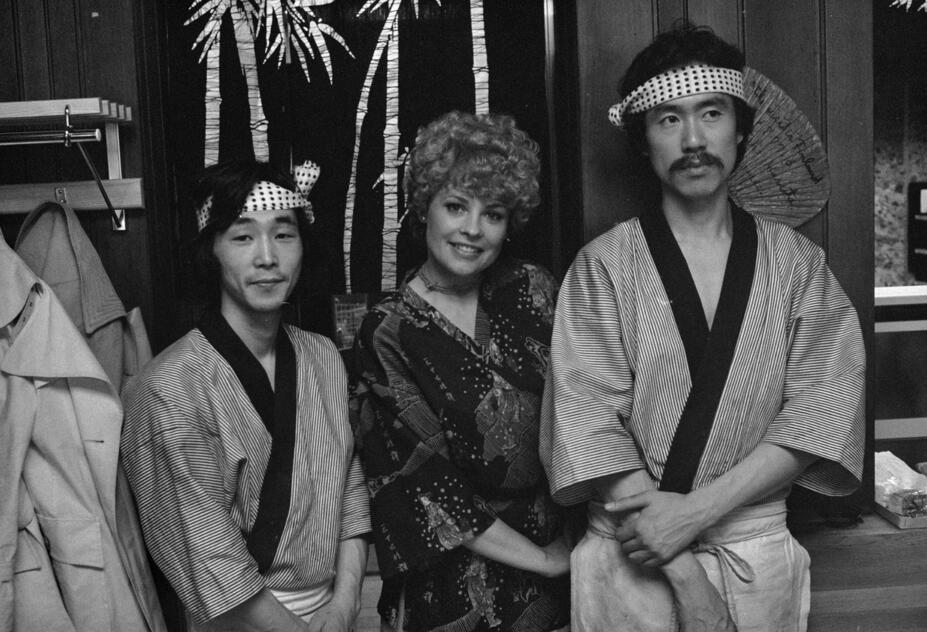
Of course, Finland was not completely closed off, and a certain degree of demographic diversification could also be seen in Helsinki. A number of both women and men came to or stayed in the country due to marriage, mainly from other Western countries. Some came to study and settled in Finland after graduation, often in Helsinki. Finland also received some refugees, first from Chile and then from Vietnam, and some of them settled in Helsinki immediately or later.
According to population register data, only about 12,000 foreign-born people were living in Helsinki in 1990, making up a couple of percent of the city’s population. More than one in three of them had been born in the Soviet Union or Sweden, and few came from non-Western countries. There were around 260 Vietnamese-born and 57 Chilean-born immigrants. Around 150–200 immigrants had been born in Turkey, India, Japan and Morocco.
Helsinki had roughly 2,700 immigrants born in the Soviet Union, 1,600 in Sweden, 600 in the United States and Germany, 500 in the UK, 250 in Vietnam and Poland, 200 in France and fewer than 200 each in Turkey, India, Italy and Spain.
Neuostoliitossa syntyneitä oli noin 2 700, Ruotsissa noin 1 600, Yhdysvalloissa ja Saksassa noin 600, Britanniassa noin 500, Vietnamissa ja Puolassa noin 250, Ranskassa noin 200 ja Turkissa, Intiassa, Italiassa ja Espanjassa kussakin alle 200.
Large-scale immigration after the end of the Cold War
The liberation and eventual collapse of the Soviet Union changed the situation completely. People would come across the eastern border from Russia and across the Gulf of Finland from the newly independent Estonia for work, studies and family reasons. As a result, the Estonian and Russian populations in Helsinki also grew significantly. For a while, a distinction was made between ‘old Russians’ who had been living in Finland for a long time and those who had arrived after the end of the Cold War.
In a 1990 interview, President Mauno Koivisto suggested that the criteria for returnees would apply to the Ingrian people living in the Soviet Union. According to Koivisto, these people were Lutheran Finns who had been deported during Swedish rule to what was part of Russia and the Soviet Union. This interpretation resulted in an estimated 30,000 returnees with a Finnish bloodline and their families coming to Finland. According to a recent MoniSuomi survey, as many as one in ten immigrants in Helsinki and a significant proportion of those with a Soviet background would fall into this group.
The first Somali immigrants also came from the Soviet Union, having decided to seek asylum in Finland as the Soviet Union was threatening to fall apart and Somalia had descended into civil war. Finland also received people fleeing the wars caused by the dissolution of Yugoslavia and other conflicts around the world as asylum seekers. Many refugees have moved to Helsinki after having first lived elsewhere in Finland. In many cases, an asylum seeker who has been granted a residence permit or who has come to Finland under a refugee quota has been able to reunite their family in Finland and Helsinki.
In 2000, the proportion of foreign-born people in the city’s population had risen to 6%, totalling around 34,000. Those born in the Soviet Union were by far the largest group, followed by those born in Estonia, Sweden and Somalia. However, the city was already home to people born in more than a hundred countries around the world, and there were already more than a hundred native languages registered in the population statistics – many of which only had a small number of speakers, though.
The figure shows the growth in the number of Helsinki residents born in the former Soviet Union, Estonia, Sweden and Somalia every two years between 1990 and 2000. The number of people from all of the aforementioned countries increased every year, with the largest increase in the number of immigrants from the former Soviet Union.
Kuviossa kuvataan entisen Neuvostoliiton, Viron, Ruotsin ja Somalian alueella syntyneiden helsinkiläisten lukumäärän kasvua kahden vuoden välein vuosina 1990-2000. Kaikissa maissa syntyneiden lukumäärä kasvoi vuosi vuodelta, eniten entisen Neuvostoliiton alueella syntyneiden henkilöiden.
The many faces of diversity in Helsinki
As a result of immigration, the linguistic and cultural landscape of Helsinki has changed greatly. According to the official language statistics, there were around 160 native languages in the city that had long been Finnish and Swedish-speaking. In reality, many other languages are also spoken in Helsinki, as not all languages are included in these statistics. Helsinki is multilingual, both in the sense that multiple languages are spoken here and in the sense that many people are bilingual or even multilingual.
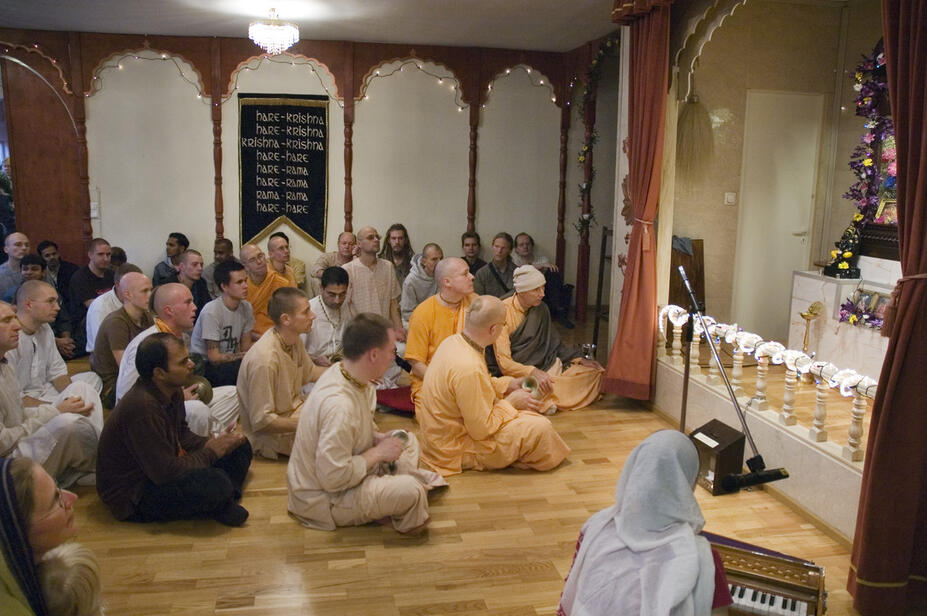
All of the world’s major religions can also be said to be present in Helsinki, and many smaller ones too. For example, Islam and Christianity also have a lot of internal variation and different ways of believing and practising the faith. Some religious groups in Finland are organised in the traditional way as religious communities with official members. However, many religious communities operate on an unorganised and therefore more informal basis.
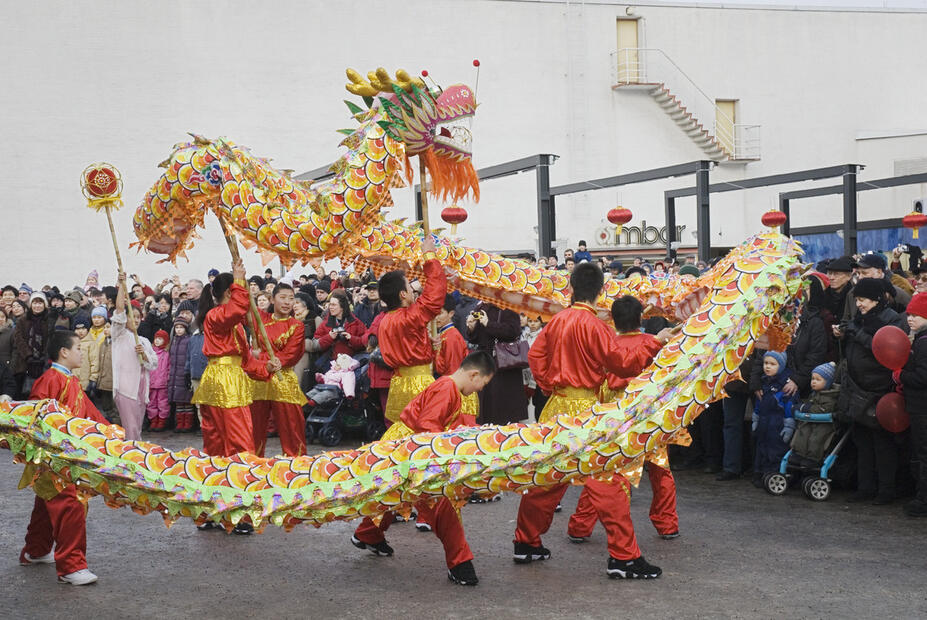
In addition to Finland’s neighbouring countries, Asia has become a major source of migration. People have come from a variety of countries on the continent for many different reasons. For example, many highly skilled professionals have migrated from India, restaurant workers from Nepal, people married to Finns from Thailand and health care professionals from the Philippines. With regard to Africa, Somalia is the only country from which Helsinki has received a substantial number of immigrants. With the exception of Estonia, migration from the European Union has been low.
Shown on the map as different sized spheres, there are more than 10,000 people born in Russia or the former Soviet Union; 6,000–9,999 born in Iraq, Somalia and Estonia; 4,000–5,999 born in China and fewer born in other countries.
A large proportion of Helsinki residents who moved to Finland from abroad came from different Asian countries. There has been only a little migration from European Union countries other than Estonia and African countries other than Somalia.
Erisuuruisina palloina kartalla kuvattuna Venäjän tai entisen Neuvostoliiton alueella syntyneitä on yli 10 000, Irakissa, Somaliassa ja Virossa syntyneitä 6 000-9 999, Kiinassa syntyneitä 4 000- 5 999 ja muissa maissa syntyneitä vähemmän.
Global migration has changed its form in many ways in recent decades, and this is also reflected in both migration to Helsinki and the city’s population. More and more people are changing countries more than once in their life, either moving back and forth between two countries or travelling around the world. This is why Helsinki’s population is floating, so to speak: many people who come here also leave without really putting down roots. The city has to get used to this reality, as well as to the fact that many different people from a very wide range of backgrounds consider themselves to be Helsinki residents.
By the end of 2023, people with a foreign background already made up one fifth of the city’s population. This proportion is currently lower in Helsinki than in Espoo and Vantaa, but it has been increasing strongly throughout the Helsinki Metropolitan Area. This growth can also be expected to continue in the near future. According to the latest forecast regarding the foreign-language population of Uusimaa, the foreign-language population of Helsinki is projected to be around 154,700 in 2030 and 205,700 in 2040.
Helsingin karttaan on viety kaupunginosajako, johon on merkitty eri värein ulkomaalaistaustaisten osuudet. Itäisin Helsinki ja Pohjois-Helsinki painottuvat ulkomaalaistaustaisten asuinpaikkoina.
The lasting consequences of demographic diversification are heavily influenced by the children of migrants, i.e. the so-called second generation of immigration. There are already areas in Helsinki where their proportion is quite high among the youngest age groups in particular, making up over one half. At the same time, development of ethnic and cultural segregation has accelerated in the city. Although the degree of segregation is not yet notable by international standards, the differences in population structures between residential areas have clearly increased.
The bar chart shows the increase in the number of foreign-born people in Helsinki from fewer than 10,000 in 1990 to almost 110,000 in 2023, as well as the increase in the number of Finnish-born people with a foreign background in Helsinki from fewer than 1,200 in 1990 to almost 25,000 in 2023.
Pylväskaavio kuvaa ulkomailla syntyneiden lukumäärän kasvun Helsingissä alle 10 000:sta vuonna 1990 lähes 110 000 henkilöön vuonna 2023 sekä ulkomaalaistaustaisten mutta Suomessa syntyneiden lukumäärän kasvun Helsingissä alle 1 200:sta vuonna 1990 lähes 25 000 henkilöön vuonna 2023
Sources and further reading
Attias, Miriam & Artemjeff, Panu (toim.) Historiat ja väestösuhteet. Bookea, 2024.
Daher, Okan, Lauri Hannikainen & Karoliina Heikinheimo: Suomen kansalliset vähemmistöt. Kulttuurien ja kielten rikkautta. Vähemmistöoikeuksien ryhmän Suomen jaosto, 2012.
Leitzinger, Antero: Ulkomaalaiset Suomessa 1812–1972. East-West Books, 2008.
Martikainen, Tuomas, Pasi Saukkonen & Minna Säävälä. Muuttajat. Kansainvälinen muuttoliike ja suomalainen yhteiskunta. Gaudeamus 2013.
Saukkonen, Pasi: Kotoutuminen kaupungissa. Kokonaiskuva ulkomaalaistaustaisista Helsingissä vuonna 2020. Helsingin kaupunginkanslia, 2020.
Uudenmaan maakunnan vieraskielisen väestön ennuste vuosille 2022–2040 Helsingin kaupunginkanslia, Kaupunkitietopalvelut, Espoon kaupunki, Tutkimus ja tilastot, Vantaan kaupunki, Strategia- ja tutkimusyksikkö, Uudenmaan liitto, 2023.
YLEn radio-ohjelmasarja: Maahanmuuton historiaa. Yle Areena, 2012.

